

Community sports leagues often focus their energy on schedules, coaching, and player development. Yet behind every successful season lies an operational system that rarely gets attention: facility maintenance. Fields, equipment storage areas, benches, goals, and lighting systems endure constant wear throughout the year.
Without structured maintenance planning, small problems quickly escalate into costly repairs. A worn goal net becomes a broken frame. A neglected field becomes unsafe for play. Equipment left exposed to weather shortens its lifespan dramatically.
Facility maintenance planning helps leagues extend the life of their infrastructure while maintaining safe environments for athletes. When maintenance becomes a structured process rather than a reactive response, organizations reduce long-term costs and improve operational stability.
Why Facility Maintenance Planning Matters For Youth Leagues
Youth sports programs rely heavily on shared infrastructure. Community fields host multiple teams across different age groups, practices, and tournaments. This high usage accelerates wear on playing surfaces and facilities.
Without a maintenance plan, organizations often rely on emergency fixes. Emergency repairs are expensive and disruptive to scheduling. A structured maintenance system allows leagues to anticipate needs before they become operational crises.
Well-managed facilities also influence the overall experience of players and families. Clean, safe, and organized environments communicate professionalism and care. Parents notice when facilities are maintained properly, and that perception strengthens trust in the program.
Maintenance planning therefore serves two critical purposes: operational reliability and community confidence.
Understanding Seasonal Wear On Playing Surfaces
Athletic fields experience different types of stress throughout the year. Weather conditions, frequency of play, and the type of sport all influence how quickly surfaces deteriorate.
Natural grass fields suffer from compaction, drainage problems, and worn goalmouth areas. Artificial turf fields face different challenges such as fiber flattening and rubber infill displacement.
Youth League Field Wear Factors
| Factor | Impact On Field Condition | Typical Maintenance Need |
|---|---|---|
| High Game Volume | Grass thinning and soil compaction | Aeration and reseeding |
| Weather Exposure | Drainage issues and erosion | Surface grading and drainage repair |
| Equipment Movement | Worn sideline areas | Rotating field usage |
| Seasonal Dormancy | Reduced turf recovery | Off-season restoration |
Monitoring these patterns allows facility managers to schedule maintenance at appropriate intervals rather than waiting for damage to appear.
Field rotation schedules are also useful tools. Rotating practice areas spreads wear evenly across the playing surface and helps prevent severe damage in concentrated locations.
Equipment Maintenance And Storage Planning
While fields receive the most visible wear, sports equipment also experiences gradual deterioration throughout the season. Goals, nets, benches, cones, training aids, and storage containers require regular inspection.
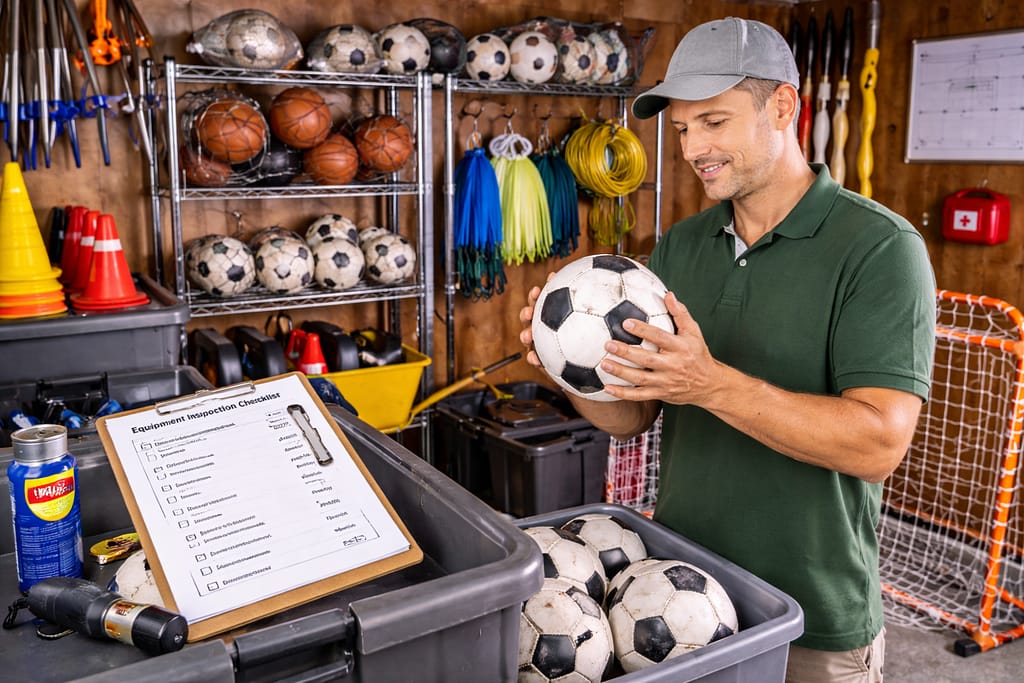
Equipment exposed to sunlight, moisture, and repeated use often degrades faster than expected. Broken nets, bent goal frames, and cracked practice equipment can create safety hazards.
Establishing a structured equipment inspection process ensures problems are addressed early.
Community Sports Equipment Maintenance Checklist
| Equipment Type | Inspection Frequency | Common Issues |
|---|---|---|
| Goal Frames | Monthly | Loose bolts or structural bending |
| Nets | Monthly | Tears and fraying |
| Training Cones | Seasonal | Cracking or fading |
| Benches | Quarterly | Structural wear or instability |
| Storage Containers | Seasonal | Weather damage or rust |
Many leagues incorporate equipment tracking into broader inventory control systems, which help organizations monitor asset conditions and replacement schedules throughout the year.
Proper storage is equally important. Equipment stored indoors or under weather-resistant shelters lasts significantly longer than gear exposed to outdoor conditions year-round.
Creating A Seasonal Maintenance Calendar
Maintenance planning becomes effective when leagues move from reactive repairs to scheduled upkeep. A seasonal maintenance calendar helps leadership teams coordinate inspections, field treatments, and equipment checks.
Seasonal planning also allows leagues to coordinate with municipalities, park departments, and facility managers who often share responsibility for field maintenance.
Typical Youth League Maintenance Calendar
| Season | Key Maintenance Activities |
|---|---|
| Preseason | Field inspection, equipment inventory, safety checks |
| Early Season | Goal installation, field marking, irrigation checks |
| Midseason | Turf repair, net replacement, bench inspection |
| Postseason | Equipment storage, field aeration, infrastructure repairs |
This structured calendar reduces operational surprises and ensures facilities remain safe throughout the competitive season.
Leagues that maintain clear maintenance schedules also benefit from improved budgeting because expenses become predictable rather than sudden emergencies.
Budgeting For Long-Term Facility Maintenance
Facility maintenance often competes with other budget priorities such as uniforms, tournament travel, and equipment purchases. However, neglecting infrastructure typically leads to higher long-term costs.
Small repairs are far less expensive than full replacements. A well-maintained field may remain playable for decades, while poorly maintained surfaces may require expensive restoration within just a few seasons.
Maintenance budgeting often includes several predictable expense categories.
| Maintenance Category | Typical Budget Allocation |
|---|---|
| Field Care | Turf treatment, drainage repair |
| Equipment Repair | Goal frame welding, net replacement |
| Facility Upkeep | Bench repairs, lighting maintenance |
| Safety Inspections | Surface checks and structural review |
By planning for these expenses annually, leagues avoid emergency fundraising or unexpected registration fee increases.
Coordinating Maintenance With Municipal Partners
Many community sports leagues operate on public fields owned by local governments. In these cases, maintenance responsibilities are often shared between league volunteers and municipal staff.
Clear communication with city recreation departments helps prevent misunderstandings about maintenance roles. Some municipalities handle field mowing and irrigation while leagues manage equipment installation and minor repairs.
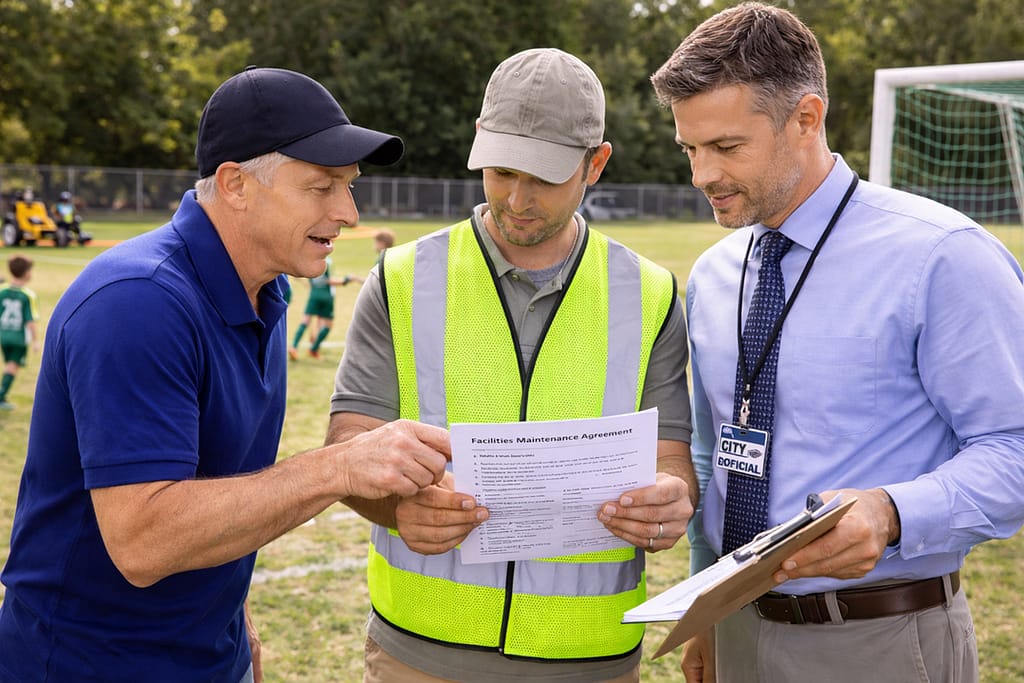
Establishing written maintenance agreements clarifies responsibilities and ensures that fields remain safe for athletes throughout the season.
Municipal recreation guidelines frequently recommend structured maintenance schedules and safety inspections for public sports facilities. Guidance from the National Recreation and Park Association highlights the importance of regular field inspections and infrastructure maintenance for safe community recreation spaces.
Collaboration between leagues and municipalities helps maintain facilities without duplicating efforts or overlooking responsibilities.
Building Sustainable Facility Maintenance Systems
The most successful youth sports programs treat facility maintenance as a continuous operational function rather than an occasional repair task.
Sustainable maintenance systems combine scheduled inspections, equipment tracking, and long-term budgeting. Leadership teams that prioritize infrastructure care reduce safety risks while extending the life of expensive assets.
Maintenance planning also supports program growth. Well-maintained facilities allow leagues to host tournaments, expand participation, and attract community support.
Athletes rarely notice the planning that keeps fields playable and equipment safe. But behind every smooth season lies a carefully managed infrastructure system working quietly in the background.
When leagues invest in structured maintenance planning, they are not simply fixing fields and equipment.
They are protecting the foundation that makes youth sports possible.