

Youth participation in outdoor sports is often framed through traditional leagues like soccer or baseball, but across Texas, a different model is quietly expanding: grassroots fishing programs. Supported by state agencies, nonprofit initiatives, and local communities, these programs are reshaping how young participants engage with recreational sports—and how participation growth is measured.
Unlike structured team sports, fishing programs operate with a hybrid model that blends education, recreation, and accessibility. The result is a scalable, low-barrier entry point that is driving measurable increases in youth involvement across diverse regions.
A Different Model Of Participation Growth
Fishing programs differ fundamentally from traditional league structures. They do not rely on fixed rosters, weekly game schedules, or competitive brackets. Instead, they emphasize open participation, skill development, and flexible engagement.
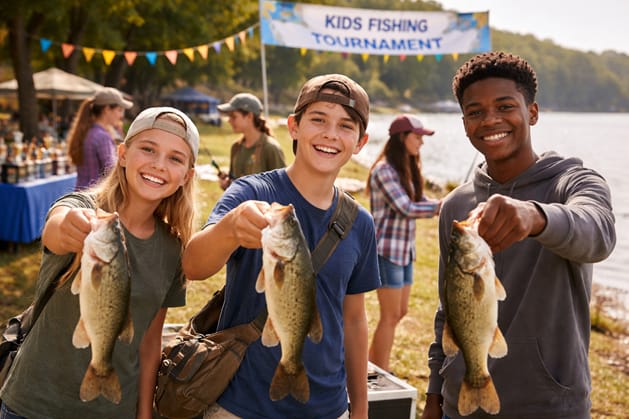
This model has several operational advantages:
- Lower infrastructure requirements compared to field-based sports
- Flexible scheduling that accommodates families and school calendars
- Broad accessibility across skill levels and age groups
In Texas, these advantages have translated into steady growth in youth participation, particularly in rural and suburban communities where access to traditional sports infrastructure may be limited.
| Participation Factor | Traditional Team Sports | Grassroots Fishing Programs |
|---|---|---|
| Entry Cost | Moderate to high | Low to moderate |
| Scheduling | Fixed league schedules | Flexible participation |
| Facility Needs | Fields, courts, lighting | Natural water access |
| Skill Barriers | Moderate | Low initial barrier |
| Retention Model | Team-based commitment | Individual and family-based |
This shift highlights an important trend: participation growth is increasingly tied to accessibility and flexibility, not just competition.
State-Level Support And Program Expansion
Much of the growth in Texas can be traced to coordinated efforts by organizations such as Texas Parks and Wildlife, which have expanded youth-focused fishing initiatives across the state.
Programs often include:
- Stocked community fishing lakes
- Youth fishing clinics and camps
- School-based outdoor education partnerships
- Equipment loan and distribution programs
These initiatives reduce both financial and logistical barriers, making participation more feasible for a wider range of families.
According to the Texas Parks and Wildlife Department, youth outreach programs have become a central strategy for sustaining long-term participation in outdoor recreation.
Accessibility And The Appeal Of Non-Traditional Sports
One of the most significant drivers behind the success of fishing programs is their accessibility. Unlike many organized sports, fishing does not require strict schedules, large teams, or specialized facilities.
Participants can engage:
- Individually or with family members
- On flexible timelines
- Without long-term commitments
This makes fishing particularly attractive for participants who may be underserved by traditional league structures, including those facing scheduling conflicts or limited access to organized programs.
From an operational perspective, this flexibility aligns with broader trends in community sports, where participation models are becoming more adaptable and less rigid.
Community Engagement And Volunteer-Driven Growth
Grassroots fishing programs rely heavily on community involvement. Volunteers, local organizations, and sponsors play a key role in organizing events, maintaining access points, and supporting youth engagement.
This decentralized model creates resilience. Instead of relying on a single governing structure, participation is supported through a network of community stakeholders.
For organizers, this reinforces the importance of building strong local partnerships—similar to strategies used in community sponsorship programs, where shared investment helps sustain long-term participation growth.
Economic Efficiency And Infrastructure Advantages
Fishing programs also present a compelling case from a cost-efficiency standpoint. Compared to building and maintaining sports complexes, the infrastructure required for fishing is relatively minimal.

Existing natural resources—lakes, rivers, and ponds—serve as primary venues, reducing capital investment requirements.
| Cost Category | Traditional Sports Facilities | Fishing Programs |
|---|---|---|
| Construction | High (fields, courts) | Minimal (access points) |
| Maintenance | Ongoing and resource-intensive | Lower, often shared with public use |
| Equipment | Team-based gear | Individual, scalable |
| Staffing | Coaches, officials | Volunteer-supported |
This efficiency allows programs to scale without significant financial strain, making them attractive for municipalities and organizations with limited budgets.
Expanding The Definition Of Youth Sports Participation
The growth of fishing programs reflects a broader shift in how participation is defined. Traditional metrics—team registrations, league sizes, and competitive outcomes—are being supplemented by more flexible measures of engagement.
These include:
- Frequency of participation
- Family involvement
- Skill progression over time
- Long-term retention in outdoor activities
This expanded definition recognizes that participation does not need to be tied to formal competition to be meaningful.
Lessons For Community Sports Leaders
The success of grassroots fishing programs offers valuable insights for other community sports organizers.
Key takeaways include:
- Lowering barriers increases participation more effectively than expanding competitive structures
- Flexibility in scheduling can attract a broader audience
- Community-driven models can sustain growth without heavy infrastructure investment
- Non-traditional sports can complement—not compete with—existing programs
These lessons are increasingly relevant as leagues look for ways to address participation challenges and adapt to changing community needs.
A Broader Future For Participation Growth
Youth fishing programs in Texas demonstrate that participation growth is not limited to traditional sports pathways. By prioritizing accessibility, flexibility, and community engagement, these programs are expanding the reach of recreational sports in meaningful ways.
For administrators and policymakers, the implication is clear: the future of participation growth will be shaped not just by what sports are offered, but by how they are structured.
Communities that embrace diverse, adaptable participation models will be better positioned to engage the next generation of athletes—on and off the field.