

Ever wonder why your second grader isn’t facing high school pitchers? Thank the sanity-preserving genius of sports age brackets.
Little League’s research confirms what every parent knows intuitively: kids want to play with classmates. Without proper youth league rules, we’d have chaos resembling Lord of the Flies with aluminum bats.
The system creates what I call developmentally appropriate competition. Because nothing kills athletic passion faster than an eight-year-old facing puberty’s fastball.
These carefully crafted age groups ensure everyone gets to enjoy the game. It’s about fun, safety, and preventing existential crises on the diamond.
How Leagues Set Age Groups
Ever wonder how youth sports organizations decide on those cutoff dates? It’s not just random. It’s like a big meeting where they figure it out together.
Baseball and softball have their own ways of setting age groups. They don’t follow the same rules. It’s like each sport has its own special formula.
They use overlapping divisions to help local programs. This lets communities adjust their youth league rules to fit their players. It’s all about making things work.
Want to know where your child fits in? Use LittleLeague.org’s age calculator. It’s like a magic tool that tells you exactly where they belong. Remember to check it before talking to league officials.
This system is like a mix of national rules and local freedom. It’s a way to balance rules with flexibility. It’s smart and sometimes even makes sense.
Typical Age Brackets by Sport
Welcome to youth sports’ version of Dante’s circles. Age brackets separate future stars from those learning the basics. These sports age brackets are not random numbers but important developmental milestones.
Baseball’s age groups are like a career ladder for young players. Tee Ball (4-7) is where dreams start and parents learn patience. The Minor League and Coach Pitch (7-11) is the first big step, where coaches see who has real skills.
The Major League (9-12) is where stars shine and parents become stats experts. The Intermediate Division (11-13) captures the middle school vibe in baseball.
Softball has its own path. It goes from A Softball (5-6) to Juniors (13-14). Each level is a big step in both sports and social growth.
These youth league rules come from years of studying child growth and sports. They match kids’ skills with their readiness.
| Baseball Division | Age Range | Softball Division | Age Range |
|---|---|---|---|
| Tee Ball | 4-7 | A Softball | 5-6 |
| Minor League | 7-11 | AA Softball | 7-8 |
| Major League | 9-12 | AAA Softball | 9-10 |
| Intermediate | 11-13 | Majors Softball | 11-12 |
| Junior League | 12-14 | Juniors Softball | 13-14 |
Knowing these age groups helps parents set the right goals. It’s not just about being good – it’s about being ready emotionally and physically.
The sports age brackets are flexible. They help early starters and late bloomers stay competitive. This system knows that age isn’t everything.
These youth league rules help kids grow at their own pace. The journey from tee ball to junior leagues is a well-thought-out plan in amateur sports.
When/How To “Play Up” or “Play Down”
Imagine your 10-year-old throws a curveball that surprises even seasoned coaches. Some 12-year-olds might even flinch at pop flies. This is the world of developmental timelines, where youth league rules meet real-life growth.
The system is flexible for a reason. It’s because humans grow at different rates. It’s like school, but with more dirt and fewer books.
Evaluations are key – they’re where kids show off their skills and parents chat on the sidelines. It’s like American Idol, but with more baseball and less harsh critics.
Playing up means showing you’re better than your age group. Like that 10-year-old who pitches like a pro. The system gives talented kids a chance to shine.
Playing down is for medical or developmental reasons. It’s not about holding kids back. It’s about matching their abilities to the right level. This is seen in divisions like Challenger, where older players can join if they’re in school.
This isn’t about cheating the system. It’s about giving kids the best chance to enjoy sports. The right level of competition can make all the difference.
| Scenario | Requirements | Typical Approval Process | Considerations |
|---|---|---|---|
| Playing Up | Exceptional skill evaluation results | Coach recommendation + league approval | Social maturity, physical safety |
| Playing Down | Medical or developmental documentation | League board review + physician input | Team composition, competitive balance |
| Challenger Division | School enrollment status | Automatic eligibility up to age 22 | Inclusion-focused, adaptive rules |
The truth is, Sports age brackets are just guidelines. The best leagues know growth isn’t always linear. Kids do best when they compete at their level, no matter the age.
It’s not about easy wins. It’s about finding the right place for kids to grow. Putting them in the wrong spot can ruin the game for everyone.
Registration Deadlines by Division
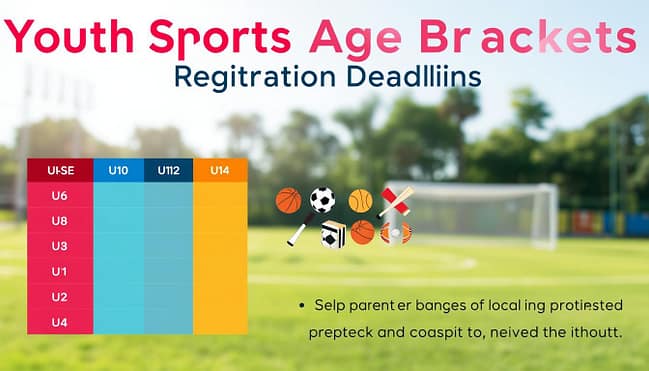
Registration deadlines are key to staying organized. They vary by league but always follow the same rule: earlier divisions have earlier deadlines.
The 2025 rule change is a game-changer. It lets parents of younger players (League Age 4-7) choose their child’s baseball league. This is a big step towards making youth sports more democratic!
Registration deadlines are set for good reasons. They help form teams, order uniforms, and find coaches. Missing them can mean your child might not get to play.
Here’s a tip: mark your calendar for each division’s registration period. The earlier you register, the better your chances of getting into a competitive team. It’s like getting tickets to a popular concert, but the concert is your local Little League game.
| Age Group | Typical Registration Period | 2025 Rule Changes |
|---|---|---|
| 4-7 years | January-February | School choice flexibility |
| 8-10 years | November-December | Standard geographic rules |
| 11-13 years | September-October | Competitive placement |
| 14+ years | August-September | Tryout-based selection |
Knowing the youth league rules about registration can be a big deal. It can mean the difference between your child playing or watching. These sports age brackets are not random. They help ensure fair play and balance in the game.
Each age group has its own deadline for a reason. Younger kids need more time for training and getting their gear. Older kids need earlier tryouts and team setup.
Transitioning Between Age Groups
Moving between youth sports divisions is like navigating rapids. It’s where youth league rules and human growth meet. It’s like carrying your skills to new waters.
Little League’s approach is brilliant. They have baseball and softball for ages 4-16. The dual-rostering for 12-year-olds is like taking AP classes in sports.
The move from Coach Pitch to Player Pitch is huge. It’s like going from training wheels to riding a bike alone. Moving to Major League is like entering the big leagues of childhood.
How do you know when a player is ready to move up? Look for these signs:
- Dominance in current level suggests readiness to move up
- Visible boredom during games or practices
- Consistent requests to play with older friends
- Struggle or overwhelm suggests staying put is wiser
These transitions are not just about age. They involve skill, emotional maturity, and social growth. The best moves happen when the child leads the way.
The goal is not to rush through divisions. It’s about finding the right challenge level for growth. Sometimes that means playing up, sometimes staying put, and sometimes doing both.
Answering Parent FAQs
Ever wonder why youth sports age groups seem so confusing? You’re not alone. We’ve got answers that might make more sense.
“Which division is my child in?” is a common question. The secret is, organizations like Little League have age calculators. Visit LittleLeague.org/AgeCalculator to find out.
“Can we play outside our neighborhood?” Yes, most youth league rules let kids play based on school location. And 2025 brings even more freedom. It’s all about community sports, right?
“What about special needs players?” The Challenger Division is for ages 4-18 (up to 22 in some cases). It shows inclusivity really works.
Leagues have evaluation processes for advanced kids. And there are options for kids who are developmentally behind. The answers are out there, but you might need to read a lot of documents.
For more detailed answers, check out our youth soccer league FAQs. They cover everything from equipment to game schedules.
The truth about sports age brackets? They’re more flexible than they seem. The system has thought of your concerns and has solutions ready.
So, take a deep breath. The answers are out there. You just need to know where to look – and maybe a strong cup of coffee.
Conclusion
So, here’s the truth about youth sports age groups. They’re not random rules made by someone in charge. These rules help kids grow and show off their skills. It’s like creating the perfect place for kids to play together.
Little League got it right when they said sports teach important life lessons. These lessons help kids become better people and build strong communities. It’s all about kids playing games, not the other way around.
The best part of these age brackets is they let kids grow in a safe way. So, when you’re dealing with youth league rules, think of it as more than just a season. It’s a chance for your kid to learn valuable life skills through play.