

As a volunteer coach, I look at national-team windows through a simple question: what can young players handle when the speed, spacing, and pressure rise? For the September and October 2026 window, USMNT Youth Integration is not a side note. It is the main coaching story around matches against Peru on September 26, Chile on September 29, Mexico on October 3, and Canada on October 6.
The timing matters. As of September 28, 2026, the Peru match on September 26 has already been played, while Chile, Mexico, and Canada remain ahead on the calendar. The research available here does not include the Peru result, so any fair review has to stop short of grading that performance by scoreline. What can be assessed is the roster design: a younger group, many first-cap candidates, and enough senior leadership to keep the camp from becoming only an audition.
USMNT Youth Integration Roster Profile
The roster profile is clear enough to shape the analysis. Mauricio Pochettino called 28 players for this four-match window, with 13 veterans from the 2026 FIFA World Cup and 13 uncapped players. U.S. Soccer also listed the uncapped group at an average age of 19 years and six months, a striking number for a senior national-team camp U.S. Soccer roster release.
That mix tells us two things. First, the staff is not just filling empty roster spots with young players. A group this young has to be coached with clear roles, simplified reference points, and honest post-match feedback. Second, the veterans are not just there to start matches. Players such as Tyler Adams and Antonee Robinson, each listed at 58 caps in the research, give the staff a way to anchor training habits, communication standards, and match management.
Why USMNT Youth Integration Changes The Coaching Read
For volunteer coaches, USMNT Youth Integration is a useful case study because it separates talent identification from team function. A young winger, fullback, or midfielder can look sharp in isolated moments, but senior international soccer tests the next action. Can the player press, recover, scan, combine, and reset after a mistake? That is where the Chile, Mexico, and Canada matches become especially useful.
The roster also includes players from different development settings. MLS clubs contribute 12 of the 28 players, with nine MLS players having a chance to earn a first senior cap during the window. Sixteen players are based with European clubs, and the research notes that several are attached to teams involved in continental competitions. For a national-team staff, that creates a wide range of club contexts, tactical languages, and weekly demands inside one camp.
Match Demands Against Peru, Chile, Mexico, And Canada
Because Peru was played on September 26, any discussion of that match should be framed as a completed test rather than a future assignment. Without a score or verified match details in the research, the safest coaching read is structural: Peru gave the staff an early look at how a young roster handled senior rhythm and international contact before the remaining three matches.
Chile on September 29 offers a short-turnaround test. From a coaching standpoint, that matters because young players often show their growth not only in the first match, but in how they respond after video review, recovery, and a second tactical plan. If Pochettino rotates heavily, that would not be surprising given the size and age profile of the squad, but the research does not provide confirmed lineups. Any projection should stay cautious.
Mexico on October 3 and Canada on October 6 bring a different type of pressure because of regional familiarity and the emotional weight that often surrounds those fixtures. The value for young players is not simply the opponent name. It is the concentration test: managing duels, crowd energy, game state, and transition defense while staying connected to the senior players around them.
What Coaches Can Watch Without Guessing
Rather than guessing lineups, coaches can watch for repeatable details. Does a young fullback receive help from the nearest midfielder? Does a teenager press with the group or run alone? Does the back line keep spacing after a turnover? Does a young attacker make the second run after the first pass is blocked? Those details are not flashy, but they often tell more than one highlight clip.
One useful comparison for local coaches is how youth development becomes visible during senior tests. I covered a similar theme in this related piece on USMNT youth development, especially around what local leagues can learn from national-team selection and match environments. The same idea applies here: the jump from promising player to trusted contributor is built through decisions under pressure.
Player Development Signals In The October Roster
The uncapped group includes players with recent youth international tournament experience. The research lists Cole Campbell, Zavier Gozo, Peyton Miller, Brooklyn Raines, and Frankie Westfield as 2025 U-20 FIFA World Cup participants, while Mathis Albert, Julian Hall, and Cavan Sullivan were part of the 2025 U-17 FIFA World Cup. That background does not guarantee senior success, but it does suggest the staff is using youth national-team evidence as part of the senior evaluation path.
Cavan Sullivan is one of the most notable age markers. Soccer America reported that he would be 17 years old on September 28, 2026, making him the youngest player on the roster Soccer America roster breakdown. Age alone should not drive the analysis. For a player that young, the better questions are about role clarity, minutes management, and whether his touches come in situations where he can make sound decisions.
Damion Downs also changes the attacking picture. The research states that Downs, age 22, was added on September 20, 2026, replacing Ricardo Pepi after Pepi withdrew due to injury. Downs already has six caps, so he sits between the uncapped prospects and the established veterans. That middle group can be valuable in camp because they often understand both sides: the hunger of newer players and the expectations of a senior setup.
- Tempo: a younger roster can raise running power, but pressing only helps if the lines move together.
- Composure: Chile, Mexico, and Canada should test decision-making after contact, turnovers, and missed chances.
- Defensive spacing: newer defenders need clear cover and communication, especially against experienced attackers.
- Midfield balance: Adams, Yunus Musah, Malik Tillman, and others can help connect phases if roles are clear.
Community Coaching Lessons From This Window
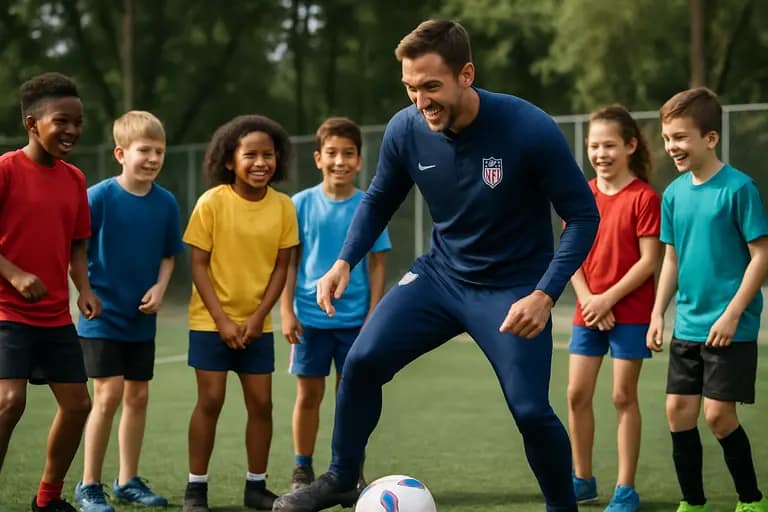
National-team roster analysis can feel distant from weekend youth soccer, but there are practical lessons here. Young players improve when coaches define what success looks like beyond goals and assists. A winger may be asked to press the outside shoulder. A midfielder may be judged on receiving angles and first pass selection. A defender may need to win the next play after losing the first duel.
That approach helps parents and players, too. If a young player is only praised for scoring, the player may miss the habits that earn trust at higher levels. This roster window gives coaches a public example of that process. The staff is evaluating young talent, but the test is not only athletic ability. It is whether players can fit into a team structure beside veterans and against senior opponents.
For broader soccer coverage across our network, check out Sports Wire News which offers extensive insights into national-team and club dynamics. The key for community coaches is to bring the conversation back to teachable behaviors: recovery runs, communication, spacing, and response after mistakes.
USMNT Youth Integration Match Stakes
USMNT Youth Integration should be judged with patience and standards at the same time. Patience is needed because teenagers and first-cap players will not look fully settled every minute. Standards are needed because senior international soccer does not pause for development. The best outcome is not simply that young players appear in matches. It is that the staff learns which players can absorb instruction, handle pressure, and contribute to a team plan.
The Chile match on September 29, Mexico match on October 3, and Canada match on October 6 should give clearer evidence than roster age alone. If the young group can show coordinated pressing, cleaner rest defense, and better choices in transition, the window will have real value even without overreading one result. If the group struggles, the coaching staff still gains information about where the next layer of development must focus.