

Community recreation programs are evolving rapidly as new sports capture the interest of participants across multiple age groups. For decades, traditional sports such as basketball, softball, and soccer dominated local league offerings. Today, however, emerging activities—especially pickleball—are transforming how municipalities design facilities, schedule programming, and engage community members.
The rise of these sports is not simply a passing trend. It reflects broader shifts in recreational behavior, where accessibility, social interaction, and flexible participation matter more than rigid competitive structures.
As participation grows, community recreation leaders are rethinking how facilities are built, how leagues operate, and how new sports can fit alongside established programs.
Why Pickleball Is Growing So Quickly
Few recreational sports have expanded as rapidly as pickleball. What began as a niche activity played primarily in retirement communities has become one of the fastest-growing sports in North America.
Several characteristics explain its rapid adoption. The game requires minimal equipment, has a relatively small playing area, and can be learned quickly by players of varying athletic backgrounds. This accessibility allows beginners to participate without the steep learning curves associated with many traditional sports.
Pickleball also supports strong social interaction. Games are typically short, rotation systems allow multiple players to participate within a session, and courts can be shared easily among groups. These qualities make the sport ideal for community recreation programs seeking to maximize participation with limited facilities.
As interest continues to expand, recreation departments across the country are adapting existing courts and creating new league formats to accommodate growing demand.
Emerging Recreational Sports Expanding Community Participation
Pickleball is not the only sport influencing community recreation trends. Several newer or reimagined activities are drawing participants who may not have previously joined organized leagues.
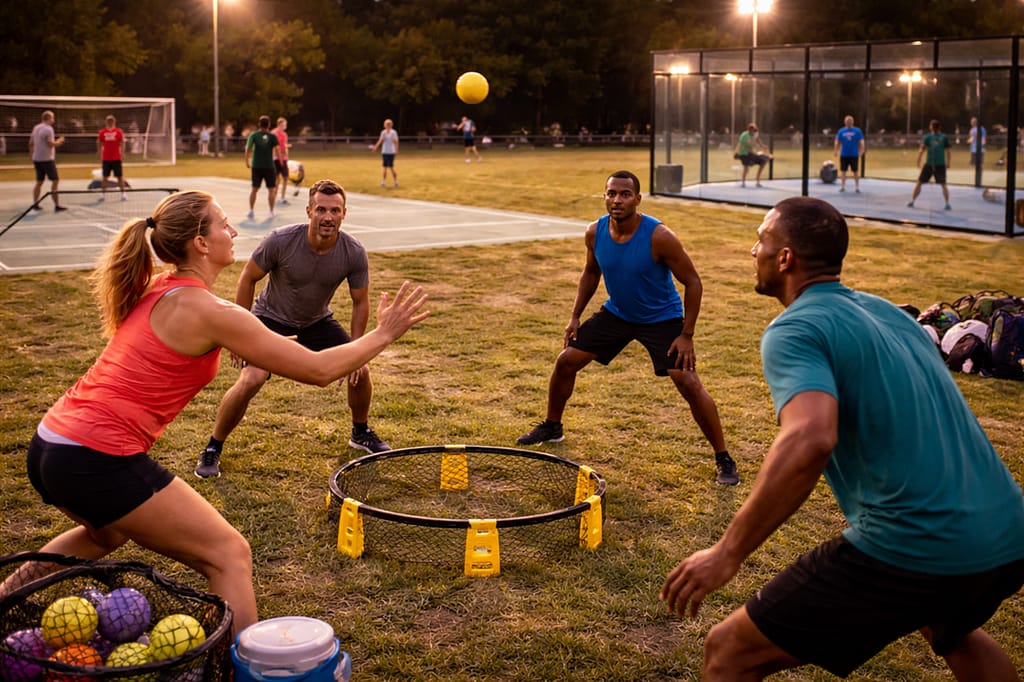
Many of these sports share similar characteristics: simplified rules, smaller playing areas, and an emphasis on social engagement rather than elite competition.
Popular Emerging Recreational Sports
| Sport | Key Appeal | Typical Community Format |
|---|---|---|
| Pickleball | Easy learning curve and social play | Ladder leagues and open play sessions |
| Padel | Fast-paced racquet sport with enclosed courts | Doubles leagues |
| Spikeball | Portable and highly social | Tournament-style events |
| Futsal | Small-sided indoor soccer | Seasonal leagues |
| Kickball | Low barrier to entry | Social recreational leagues |
Because these sports require fewer players and less space than traditional field sports, communities can introduce them without large facility investments.
Facility Design Is Changing To Support New Sports
The growth of emerging sports is influencing how recreation facilities are designed and upgraded. Traditional multi-use courts and open fields are now being reconsidered to support flexible programming.
For example, tennis courts are increasingly being converted or lined to accommodate pickleball. This allows communities to add new recreational opportunities without constructing entirely new facilities.
Similarly, gymnasiums are adapting their layouts to support sports such as futsal and small-sided indoor soccer. These changes allow recreation departments to serve a wider range of participants using the same physical infrastructure.
Facility planning now focuses heavily on adaptability. Instead of designing single-purpose venues, modern recreation spaces often incorporate multiple line markings, portable equipment, and flexible scheduling systems.
This shift enables communities to respond more quickly when participation trends change.
How New Sports Affect League Scheduling And Operations
The introduction of new recreational sports also changes how leagues are organized and scheduled. Emerging sports typically attract participants with varied skill levels, which requires flexible league structures.
Many programs use rotation-based scheduling models or open-play sessions where participants cycle through games rather than committing to traditional season-long teams.
These flexible structures make leagues easier to manage and increase overall participation. They also help reduce facility conflicts, especially in communities where field space is limited.
Administrators often rely on proven strategies from adult evening league scheduling systems to coordinate courts, manage participation levels, and distribute playing time fairly across multiple sports.
The ability to adapt scheduling models is becoming an essential skill for recreation managers overseeing modern community programs.
Technology And Data Are Helping Recreation Programs Adapt
Recreation departments are increasingly using digital tools to manage the growth of emerging sports. Online registration platforms allow administrators to track participation trends and adjust programming based on demand.
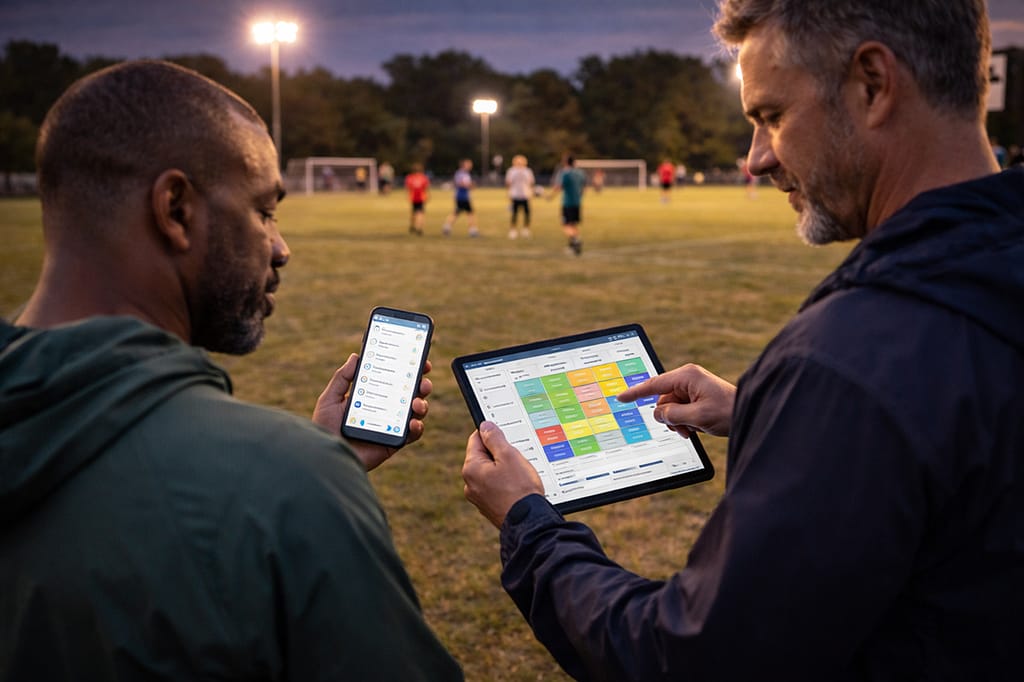
Scheduling software also helps allocate facilities efficiently when multiple sports share the same space.
Data collected from registration systems can reveal which sports are growing fastest, when peak participation occurs, and how many courts or fields are needed to support future programs.
Organizations such as the Sports & Fitness Industry Association regularly publish participation reports showing how recreational trends influence sports programming across the country.
These insights help communities make informed decisions about facility investment and programming expansion.
Balancing Traditional Sports With Emerging Activities
While new sports bring exciting opportunities, recreation programs must balance innovation with tradition. Established sports such as soccer, baseball, and basketball still attract large numbers of participants and remain central to many community leagues.
Successful recreation departments therefore design programming that supports both traditional leagues and emerging activities.
This balance ensures that long-time participants continue to enjoy familiar programs while new players discover recreational opportunities that match their interests and schedules.
By offering a mix of sports, communities can maintain strong participation across multiple demographics and skill levels.
The Future Of Community Recreation Programs
The rapid rise of pickleball and other emerging sports signals an important shift in community recreation. Participants increasingly value accessibility, social interaction, and flexible formats that fit into modern lifestyles.
Communities that recognize these trends are redesigning facilities, experimenting with new league formats, and investing in programming that welcomes participants of all ages and abilities.
Emerging sports will not replace traditional leagues, but they will continue reshaping how recreation programs operate.
For community organizers and recreation managers, the challenge is not choosing between old and new—it is creating systems where both can thrive.