

In 2026, the Pecos League, one of the most geographically diverse independent baseball leagues in the United States, once again highlights a defining characteristic of smaller-market sports systems: structural fluidity. With teams spread across states like Texas, New Mexico, Arizona, and California, the league continues to operate in environments where stability is not guaranteed—but adaptability is essential.
Recent developments, including franchise adjustments and market exits such as the Vallejo Seaweed’s departure prior to the 2026 season, underscore the realities of operating in independent baseball. Unlike affiliated minor league systems backed by MLB organizations, leagues like the Pecos operate with limited financial buffers, making them highly responsive—and vulnerable—to local market conditions.
For community sports administrators and league organizers, the Pecos League offers a real-time case study in how sports ecosystems function when flexibility becomes a structural necessity rather than a strategic choice.
The Pecos League Model And Its Unique Operating Environment
Founded in 2011, the Pecos League was designed to bring professional baseball to underserved markets—often small cities without the population base or infrastructure to support affiliated minor league teams. Cities such as Roswell, New Mexico; Alpine, Texas; and Tucson, Arizona have hosted teams, creating localized sports engagement where few alternatives exist.
However, this distributed model introduces inherent variability. Teams operate with:
- Limited attendance ceilings
- Minimal corporate sponsorship ecosystems
- Shared or repurposed facilities
- Heavy reliance on local community support
| Operational Factor | Affiliated Minor Leagues | Pecos League Model |
|---|---|---|
| Financial Backing | MLB-supported | Independent, market-driven |
| Market Size | Mid-to-large cities | Small, underserved markets |
| Facility Quality | Standardized | Highly variable |
| Franchise Stability | Relatively stable | Fluid, subject to change |
This structure allows for expansion into new markets—but also makes continuity more difficult to maintain.
Franchise Turnover As A Structural Reality
The 2026 season reflects ongoing franchise fluidity within the league. The exit of teams like the Vallejo Seaweed highlights how independent leagues must constantly evaluate market viability.
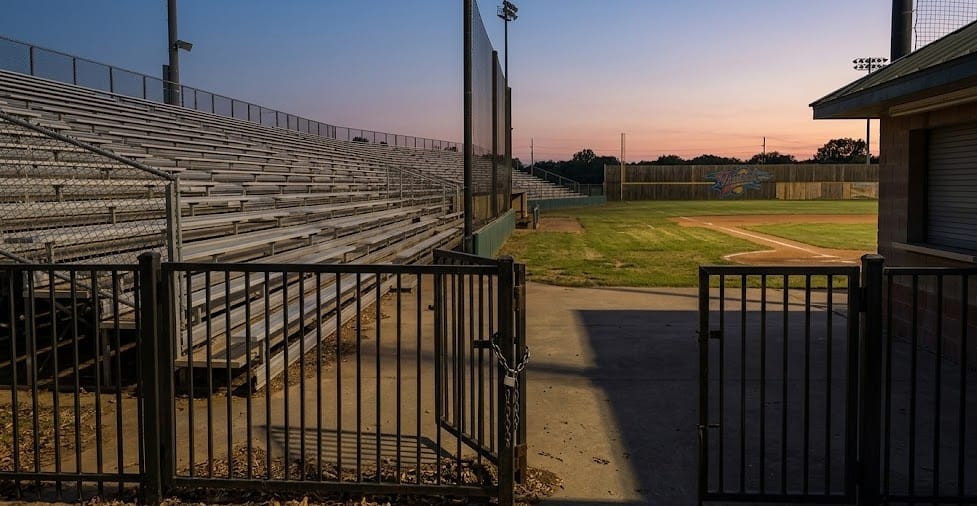
Franchise turnover is influenced by several factors:
- Local attendance levels and revenue generation
- Facility availability and operational costs
- Travel logistics across geographically dispersed teams
- Community engagement and sponsorship support
In this environment, teams are not permanent fixtures—they are adaptable components within a broader system.
This level of fluidity contrasts sharply with affiliated leagues, where franchise stability is often protected through long-term agreements and centralized oversight.
Travel, Geography, And Cost Management
One of the most significant operational challenges for the Pecos League is geography. Teams are spread across vast distances, often requiring long travel schedules that increase costs and logistical complexity.
To manage this, the league employs strategies such as:
- Regional clustering of teams when possible
- Extended road trips to reduce travel frequency
- Flexible scheduling to accommodate distance constraints
Despite these efforts, travel remains a defining cost driver, influencing decisions about team placement and season structure.
For administrators, this highlights a key principle: geographic design plays a critical role in league sustainability, particularly in regions with lower population density.
Facility Limitations And Multi-Use Constraints
Unlike affiliated minor league teams, which often operate in purpose-built stadiums, Pecos League teams frequently use shared or repurposed facilities. These may include:
- Municipal fields
- College stadiums
- Multi-sport complexes
While this approach reduces capital requirements, it introduces operational challenges:
- Scheduling conflicts with other users
- Limited amenities affecting fan experience
- Maintenance variability impacting field quality
These conditions mirror challenges seen in community facility access and scheduling systems, where shared infrastructure requires careful coordination to avoid overuse and conflict.
Player Development And Opportunity In Independent Systems
Despite structural challenges, the Pecos League continues to serve as an entry point for players seeking professional opportunities. Many athletes use the league as a stepping stone to higher-level independent leagues or affiliated systems.
The player experience is shaped by:
- Short-term contracts and performance-based retention
- Limited resources compared to affiliated teams
- High exposure to game situations due to roster turnover
This creates a competitive environment where players must adapt quickly—both on and off the field.
From a development perspective, the league provides opportunities that might not exist within more structured systems, particularly for overlooked or late-developing talent.
Community Engagement In Smaller Markets
In many Pecos League cities, teams represent one of the few professional sports options available. This creates a unique dynamic where community engagement becomes essential for survival.
Teams often rely on:
- Local partnerships with businesses and civic organizations
- Youth clinics and grassroots outreach programs
- Affordable ticket pricing to attract families
However, engagement levels vary widely depending on market conditions. In some cities, teams become central community fixtures; in others, they struggle to build consistent support.
Organizations like the Sports & Fitness Industry Association emphasize that sustained participation and engagement depend heavily on local accessibility and relevance, particularly in smaller markets.
Financial Fragility And Revenue Constraints
Independent leagues operate within tight financial margins. Revenue streams are limited compared to larger organizations and typically include:
- Ticket sales
- Local sponsorships
- Concessions and merchandise

Without significant media rights or centralized funding, teams must maximize every available opportunity.
| Revenue Source | Pecos League Reliance | Stability Level |
|---|---|---|
| Ticket Sales | Primary | Variable |
| Sponsorships | Local businesses | Limited scale |
| Concessions | Supplemental | Dependent on attendance |
| Media Rights | Minimal | Low |
This financial structure reinforces the importance of community integration and operational efficiency.
Adaptation As A Core Operating Principle
The defining characteristic of the Pecos League is its ability to adapt. Whether adjusting schedules, relocating teams, or modifying operations, flexibility is built into the system.
For sports administrators, this offers a valuable lesson: in smaller or emerging markets, rigid structures can limit sustainability. Systems must be designed to respond to changing conditions.
Key adaptive strategies include:
- Evaluating market viability on a seasonal basis
- Maintaining flexible scheduling frameworks
- Prioritizing cost efficiency over expansion speed
These approaches allow the league to continue operating despite inherent challenges.
What Smaller Markets Can Learn From The Pecos Model
While the Pecos League operates at a professional level, many of its challenges and strategies are directly applicable to community sports programs.
Lessons include:
- The importance of aligning programs with local market capacity
- The need for flexible operational structures
- The value of community engagement as a primary support system
These insights are particularly relevant for leagues operating in smaller cities or regions with limited infrastructure.
A System Defined By Movement Rather Than Stability
The 2026 Pecos League season illustrates a fundamental reality: in smaller sports markets, stability is not always achievable—but sustainability can still be maintained through adaptability.
Franchise turnover, fluctuating attendance, and operational variability are not signs of failure—they are characteristics of a system designed to operate in challenging conditions.
For EfficientDirectory’s audience, the takeaway is clear. Whether managing a community league or evaluating facility investments, understanding the balance between stability and flexibility is essential.
In environments where resources are limited and conditions change rapidly, the ability to adapt is not just an advantage—it is the foundation of long-term survival.