

Oakland’s Park Play Lending Library should change how youth sports listings show equipment access because families often need more than a field, court, or registration link before children can participate. A child may live near a park, recreation center, soccer field, basketball court, tennis area, or volleyball space, but still lack the ball, racket, mat, jump rope, glove, pads, or basic gear needed to join in. For EfficientDirectory.com, which focuses on local sports leagues, teams, schedules, sign-ups, fields, coaches, review signals, and listing accuracy, equipment access should become a visible listing detail. A youth sports listing should tell families whether gear is provided, borrowed, required, optional, or not posted.
Why Oakland’s Lending Library Is A Timely Listing Example
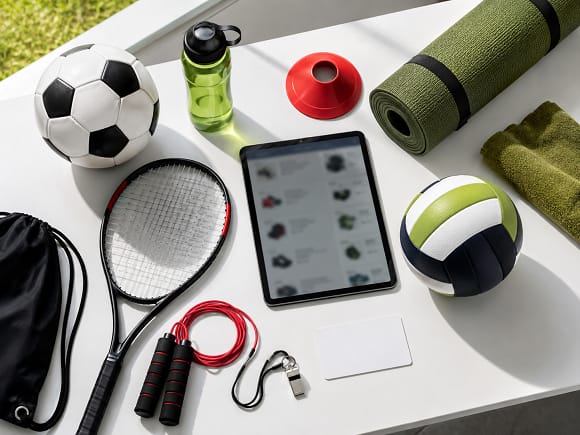
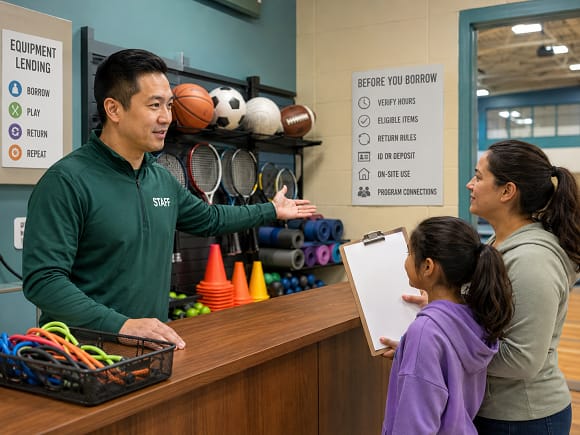
The City of Oakland announced on July 9, 2026 that Oakland Parks, Recreation & Youth Development opened a new Park Play Lending Library at the Larry E. Reid Sports Center. The city described the lending library as a community resource designed to expand access to sports and recreation opportunities for youth and families throughout Oakland. It said community members would be able to borrow items such as soccer balls, footballs, frisbees, yoga mats, and other recreation equipment at no cost through the Park Play Lending Library.
SFGATE reported on July 22, 2026 that the library debuted inside the Larry E. Reid Sports Center in East Oakland’s Brookfield Village neighborhood. Reporter Gabe Fernandez wrote that the idea came from a team led by Maribel Lopez, an Oakland Parks, Recreation & Youth Development recreation supervisor, after staff noticed families often asked to borrow equipment as summer approached. The SFGATE report said the library was stocked with footballs, soccer balls, volleyballs, jump ropes, yoga mats, tennis equipment, UNO, and dominoes, and that the idea was inspired partly by tool-lending libraries in Oakland and Berkeley.
That is exactly the kind of access detail that should appear in local sports listings. A listing that says “soccer field nearby” is less useful than one that says “soccer balls may be available through a free equipment lending library at the recreation center.” A listing that says “tennis court available” is stronger when it tells families whether rackets or balls can be borrowed, whether reservations are needed, and where borrowing procedures are posted.
For EfficientDirectory.com, the lesson is practical: equipment access can determine whether a child can play today.
Why Equipment Access Belongs Beside Field And Program Details
Youth sports participation is often discussed through registration fees, league costs, travel, and facility access. Equipment can be just as decisive. A family may avoid a sport because the starting cost feels too high. A child may want to try tennis, soccer, volleyball, yoga, or football but lack the required gear. A recreation center can reduce that barrier if families know equipment is available.
The City of Oakland said the lending library was created to help remove financial barriers that often prevent participation in healthy, active lifestyles. Oakland Parks, Recreation & Youth Development Director Myka Hammock said the project creates access, encourages active lifestyles, and ensures everyone has the opportunity to enjoy recreation. Lopez said every child deserves the opportunity to play, learn, and thrive. Those official statements show that the lending library is not just an equipment shelf; it is an access strategy.
A directory listing should reflect that. Field access, program access, and equipment access should be listed together because families make those decisions together. A child may need a safe place, an available program, and usable gear. Missing one of those pieces can stop participation.
This is especially important for entry-level and recreational sports. A child trying soccer for the first time may only need a ball, open space, and a safe setting. A beginner trying tennis may need a racket and balls before a family commits to lessons. A family interested in yoga may need mats. A lending library can turn a park or recreation center from a passive location into a usable sports access point.
What Youth Sports Listings Should Show About Equipment
A youth sports listing should not assume every family already owns the required gear. It should show what is needed, what is provided, what can be borrowed, and what still must be purchased or brought from home.
| Equipment Access Signal | What Families Need To See | Why It Matters |
|---|---|---|
| Gear Availability | Provided, loaned, bring-your-own, optional, or not posted | Helps families understand starting requirements |
| Borrowing Source | Recreation center, school, league, coach, library, nonprofit, or city program | Shows where families can get equipment |
| Eligible Items | Balls, rackets, mats, cones, gloves, helmets, pads, nets, or games | Clarifies which activities are supported |
| Borrowing Rules | Free, deposit required, ID required, time limit, in-center use, or take-home use | Prevents families from guessing procedures |
| Program Connection | Open play, league practice, camp, clinic, pickup, or recreation-center use | Shows whether gear supports a specific activity |
| Verification Source | City page, recreation center, program listing, league page, or last checked date | Lets readers confirm current availability |
This structure keeps a listing practical and source-sensitive. It does not invent gear, promise unlimited availability, or assume every item is always in stock. It tells families what has been publicly posted and what should be verified before arrival.
For Oakland’s Park Play Lending Library, a listing could say that the city announced free access to sports and recreation equipment at the Larry E. Reid Sports Center, including soccer balls, footballs, frisbees, yoga mats, and other equipment, with families directed to the center for available items and borrowing procedures. That is useful without overstating availability on any specific day.
How Borrowing Rules Affect Family Planning
Borrowing rules matter because families need to know whether equipment can be taken home, used only on-site, checked out for a set period, reserved in advance, or borrowed with ID. A lending library can be free and still require procedures. If those procedures are not visible, families may arrive with the wrong expectations.
The City of Oakland invited community members to visit the Larry E. Reid Sports Center to learn more about the Park Play Lending Library, available equipment, and borrowing procedures during the July 11 opening event. That detail is important: it shows borrowing procedures are part of the access model, not an afterthought.
A local sports listing should make the procedure visible when possible. If the rules are not posted online, the listing can say “borrowing procedures should be verified with the recreation center.” That is better than silence. Families can then call, visit, or check the official center page before relying on the gear.
Borrowing rules also affect program planning. A coach running a free clinic may need to know whether balls and cones are available. A parent planning open play may need to know whether gear can leave the building. A teenager meeting friends after school may need to know whether the lending library is open during the same hours as the court or field.
For EfficientDirectory.com, this means equipment access should be treated like field access: useful only when the rules are clear.
Why Equipment Access Connects To Youth Sports Costs
Equipment access belongs in sports listings because cost is one of the most important barriers for families. SFGATE reported that the Aspen Institute’s 2025 State of Play data showed youth sports costs rose 46% since 2019, with the average family spending about $1,016 annually on a child’s top sport. The same SFGATE article connected Oakland’s lending library to broader concerns about rising youth sports costs and access.
That does not mean a lending library solves every cost issue. Families may still face registration fees, uniforms, transportation, tournament expenses, shoes, sport-specific protective gear, and private lessons. But basic equipment availability can lower the first barrier for recreational play, beginner exploration, and informal activity.
A listing can help families compare options more honestly. A program that provides gear may be more accessible to beginners than one requiring families to buy equipment immediately. A recreation center with free loaner equipment may be a better starting point for a child who wants to try multiple activities before committing to one sport.
The Aspen Institute’s youth sports spending research gives directories a source-backed reason to include gear notes. If costs are rising, listings should show where equipment access can reduce friction.
How Recreation Centers Should Be Listed As Access Hubs
The Larry E. Reid Sports Center is more than the location of a lending library. The City of Oakland’s official page says the 25,000-square-foot center offers year-round recreation programs focused on health, wellness, and fitness for all ages. It describes the center as part of the William “Bill” Patterson Park complex, with a fitness, aquatic, and dance center, Ira Jinkins Recreation Center and gymnasium, tennis courts, a baseball diamond, and a toddler playground through the Larry E. Reid Sports Center.
That type of facility should be listed as a sports access hub, not just a building. Families may use it for equipment borrowing, classes, swimming, courts, gym activities, youth programs, rentals, and nearby park use. A directory can show the relationship between the recreation center and the available sports spaces.
For example, a listing could connect the lending library with nearby courts, fields, and programs. It could explain that borrowed equipment may support informal play, recreation-center activities, or park use, depending on posted procedures. It could also show whether the center has current program registration, room rentals, pool availability, or seasonal classes.
A hub listing should still avoid unsupported promises. The City page says the pool is currently open while the waterslide remains unavailable, which shows why status notes matter. Equipment, facilities, and programs can change. Listings need update dates and official source links.
Why Equipment Access Should Shape Reviews And Trust Signals
Reviews for youth sports and recreation listings should include equipment access where relevant. A family may rate a program highly because equipment was available. Another may be frustrated because gear ran out or borrowing rules were unclear. Without equipment categories, reviews become too vague to guide new families.
A better review structure would separate program quality, facility condition, field access, equipment access, staff communication, cost clarity, and schedule reliability. This helps families understand whether a problem came from coaching, gear availability, crowding, or unclear rules.
A listing should avoid fake reviews, fake ratings, and unsupported claims that a program is the best option. The Federal Trade Commission’s consumer review rules warn against deceptive review practices, including fake or misleading consumer reviews. A youth sports directory should use clear criteria rather than invented praise.
For Oakland’s Park Play Lending Library, useful review signals might include equipment variety, check-out clarity, staff helpfulness, availability during peak hours, condition of items, and whether families could use nearby facilities easily. Those are practical details that help other families decide whether to visit.
What Families Should Verify Before Relying On Borrowed Gear
Families should verify the lending library’s current hours, eligible equipment, borrowing rules, ID or deposit requirements, return rules, whether items can leave the building, and whether equipment is available for the sport they want to play. They should also check whether the nearby field, court, gym, or recreation program is open at the same time.
Parents should not assume every item is always available. A soccer ball, tennis racket, yoga mat, football, or volleyball may be checked out, temporarily unavailable, damaged, or limited by staff rules. A listing should encourage families to verify before planning around borrowed gear.
Families should also check safety and sport fit. Some activities need protective gear, proper shoes, adult supervision, or program registration. A lending library can help with basic access, but it does not replace sport-specific rules. A directory should present equipment access as a support signal, not a guarantee that every sport is fully covered.
For families comparing programs, the best listing tells them what gear is required, what gear is available, where to borrow it, and what still needs to be brought from home.
Why Equipment Access Should Become A Listing Standard
Oakland’s Park Play Lending Library should change how youth sports listings show equipment access because gear availability can determine whether a family participates. A field, court, or recreation center becomes more useful when families know whether equipment is available, free, borrowable, limited, or required.
The Oakland example is timely and specific. The city opened a free equipment lending library at the Larry E. Reid Sports Center during National Park and Recreation Month. The program is connected to Oakland Parks, Recreation & Youth Development’s equity and access work. SFGATE reported that it was started after staff observed families asking to borrow equipment, and that the library includes items ranging from sports balls to yoga mats and games.
A stronger youth sports listing should now include equipment status, borrowing source, eligible items, rules, hours, program connection, and last verified date. It should separate confirmed gear access from assumptions. It should link to official city or recreation-center sources when possible. It should avoid fake reviews and unsupported claims.
For EfficientDirectory.com, this is a practical next step in local sports discovery. Families need to know not only where to play, but whether they have what they need to play. When equipment access is visible in youth sports listings, more families can compare programs with fewer surprises and lower starting barriers.
