

Oakland’s Park Play Lending Library should change how listings show equipment access because a recreation opportunity is not only about whether a field, gym, pool, or court exists. Families also need to know whether they must bring gear, whether equipment can be borrowed, what items are available, where the lending point is located, who operates it, and what rules apply before they arrive. A local sports listing that says “soccer available” or “recreation center open” misses a major access question if it does not explain whether a child needs to own a ball, racket, mat, or other basic equipment.
For EfficientDirectory.com, which focuses on local sports leagues, teams, schedules, sign-ups, fields, coaches, review signals, and listing accuracy, Oakland’s new Park Play Lending Library is a useful example of how sports and recreation listings should evolve. A strong listing should not only show the place and program. It should show what families can borrow, what they must bring, whether access is free or restricted, and where official updates can be checked.
Why Oakland’s Park Play Lending Library Is A Timely Listing Example
The City of Oakland announced on July 9, 2026 that Oakland Parks, Recreation & Youth Development opened a new Park Play Lending Library at the Larry E. Reid Sports Center. The city described it as a community resource designed to expand access to sports and recreational equipment, with the public opening celebration scheduled for July 11 during National Park and Recreation Month through the official Oakland Park Play Lending Library announcement.

The location matters. Oakland’s official Larry E. Reid Sports Center page describes the facility as a 25,000-square-foot sports center offering year-round recreation programs focused on health, wellness, and fitness for all ages. The city lists pools and aquatics, group exercise classes, seasonal boxing, basketball, soccer, tennis, badminton, and youth camps among the center’s program areas on the Larry E. Reid Sports Center page.
SFGATE reported that the Park Play Lending Library operates inside the Larry E. Reid Sports Center in East Oakland’s Brookfield Village and was spearheaded by recreation supervisor Maribel Lopez. The report described the lending model as a way for residents to borrow sports and recreational items such as footballs, tennis rackets, jump ropes, yoga mats, board games, and other gear rather than needing to purchase everything before playing.
That is exactly the kind of detail a directory should show. A listing should not force families to guess whether equipment is provided, borrowed, rented, or required.
Why Equipment Access Belongs Near Field And Program Details
Equipment access belongs near field and program details because the ability to play often depends on more than location. A child may have a park nearby but no soccer ball. A family may know a recreation center offers tennis but may not own rackets. A parent may want a child to try yoga, volleyball, or jump rope activities before buying gear. If a listing does not show equipment access, it can overstate how easy participation really is.
Oakland’s lending library changes the meaning of the listing. The Larry E. Reid Sports Center is no longer only a location with programs. It is also a resource point for borrowing play equipment. That should appear in directory fields beside program type, hours, age groups, facility amenities, and official source links.
This matters for families comparing options. A free or low-cost program with required gear may still be expensive if families must buy equipment first. A recreation center that lends equipment can lower the first-step barrier. A directory should make that visible.
For EfficientDirectory, equipment access should become a standard listing signal. Families need to know whether gear is included, available to borrow, available for rent, limited by inventory, tied to a membership, or not provided.
Why “Bring Your Own Gear” Is Not A Small Detail
“Bring your own gear” can change a family’s decision. A listing may show basketball, soccer, volleyball, tennis, or fitness programming, but every activity has different gear expectations. Shoes, balls, rackets, protective equipment, mats, water bottles, and sport-specific items all affect readiness.
Oakland’s Park Play Lending Library is a local response to that issue. SFGATE framed the program as a creative answer to rising youth sports costs, with equipment borrowing meant to help families take part without paying for every item upfront. That does not mean every recreation center can or should offer the same model. It does mean listings should identify equipment access when it exists.
A family searching EfficientDirectory.com should not have to call every center to ask basic gear questions. The listing should show whether equipment is available and what the official source says. If details are not posted, the listing should say “equipment access not posted; verify with the center” rather than assuming gear is provided.
This approach helps families avoid two common problems: arriving without required gear or skipping an activity because they assume equipment is unaffordable.
What Equipment-Access Listings Should Show
A useful listing for a sports center, park, league, or recreation program should separate required gear from available gear. It should also show whether borrowing is free, whether supplies are limited, and who manages the lending process.
| Listing Signal | What Families Need To See | Why It Matters |
|---|---|---|
| Equipment Access Status | Provided, borrowed, rented, required, limited, or not posted | Shows whether families must bring or buy gear |
| Item Types | Balls, rackets, mats, jump ropes, board games, or sport-specific gear | Helps families know what activities are supported |
| Lending Location | Recreation center desk, equipment room, park office, or program check-in | Tells families where to ask |
| Operator | City parks department, recreation center, nonprofit, league, or partner | Shows who controls inventory and rules |
| Eligibility Rules | Resident-only, program participants, public use, age limits, or ID requirements | Prevents arrival-day confusion |
| Return Rules | Same-day return, checkout period, deposit, or posted center policy | Protects families and the program |
| Last Verified Date | When the listing checked official information | Reduces stale access claims |
This table fits EfficientDirectory.com because it turns a listing into a practical planning tool. It does not invent inventory or promise availability. It shows what families should verify.
Why Borrowable Gear Changes The Value Of A Recreation Center Listing
Borrowable gear changes the value of a recreation center listing because it turns the center into a point of access, not just a building. Families may use the center to try new activities, borrow items for park play, or participate in programs without buying gear immediately.
That distinction matters in East Oakland’s Brookfield Village, where local reporting described the lending library as a neighborhood resource. A directory listing should reflect that community function. It should make clear that the lending library is at the Larry E. Reid Sports Center, not a general citywide guarantee at every Oakland park.
A listing should also avoid overstating the program. It should not say “all equipment is always available” unless the city posts that. It should not list exact inventory counts unless official sources provide them. It should not claim the program eliminates all youth sports cost barriers. It should say what the official source supports: the center opened a lending library to expand access to sports and recreational equipment.
The Federal Trade Commission’s consumer review rules matter here because listings and reviews should not use fake ratings, invented testimonials, or misleading access claims. Equipment access should be described through official details and real user criteria, not promotional exaggeration.
Why Listings Should Connect Equipment Access To Program Type
Equipment access is most useful when connected to the program type. A general note that “equipment may be available” is weaker than a listing that explains which activities are supported. If a center lends soccer balls, that matters to open play. If it lends tennis rackets, that matters to court access. If it lends yoga mats, that matters to wellness programming. If it includes board games, that matters to indoor recreation and family activity.
Oakland’s official sports center page lists multiple program areas at Larry E. Reid Sports Center, including aquatics, exercise classes, boxing, basketball, soccer, tennis, badminton, and camps. A directory should not assume every listed program has borrowable gear. Instead, it should create a clean structure: posted programs in one field, borrowable equipment in another field, and official verification links beside both.
That structure helps families understand the difference between activity access and equipment access. A center may offer tennis but have limited rackets. It may offer soccer activities but expect some participants to bring shoes or protective gear. It may lend balls for casual use but require registration for organized programs.
For EfficientDirectory.com, the listing question is straightforward: what can a family do here, and what gear will they need to participate?
Why Access Notes Should Include Cost And Limits
Cost and limits should be part of equipment-access notes because “available” does not always mean free, unlimited, or guaranteed. Some programs provide gear only during supervised activities. Some require checkout. Some may ask for ID, a deposit, or same-day return. Some items may run out during busy hours.
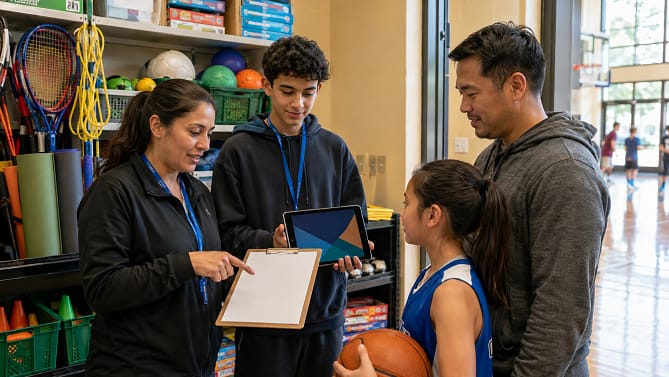
Oakland’s city announcement frames the Park Play Lending Library as a community resource for expanding access. Local reporting described residents borrowing items to use nearby. A directory can say the program is intended to expand equipment access, but families should still verify current checkout rules with the Larry E. Reid Sports Center.
This is the right balance for a directory. It gives users useful information without inventing policies. Families get the benefit of knowing that a lending model exists, while the listing stays careful about rules that may change.
A strong listing should use plain labels such as “borrowable equipment posted,” “inventory may vary,” “verify checkout rules,” and “confirm hours before visiting.” Those notes prevent the listing from becoming stale or misleading.
How Equipment Access Should Shape Reviews
Reviews for recreation centers should include equipment access as a category. A family review that says “great center” is less useful than one that says whether equipment was easy to borrow, whether staff explained checkout rules, whether items were in usable condition, and whether the listing matched the real experience.
For a lending library, useful review prompts could ask whether the listed equipment was available, whether borrowing rules were clear, whether the return process was easy, whether staff communication was helpful, and whether gear access made participation easier. Those questions support future families without relying on fake rankings or unsupported praise.
Reviews should also include date context. Equipment inventory can change quickly. A soccer ball available in July may not be available on a busy Saturday in September. A directory should treat equipment reviews as time-sensitive.
EfficientDirectory.com can make reviews more practical by separating equipment access from facility condition, program quality, staff communication, parking, hours, and registration clarity. That gives families a better way to compare recreation options.
Why Equipment Access Supports Local Sports Discovery
Local sports discovery should include access barriers. A family does not only ask, “Where is the nearest field?” It asks, “Can my child participate?” Equipment is one of the first barriers. Cost, transportation, schedule, eligibility, weather, safety, coaching, and registration all follow.
Oakland’s Park Play Lending Library shows how one city recreation center can make participation easier by lending sports and play equipment. That model should change what directories ask when they list parks, centers, leagues, and programs.
A better listing would show whether the site offers borrowable gear, free play equipment, loaner rackets, balls, mats, safety gear, or program-specific equipment. It would also show when details are unknown. “Equipment not posted” is better than silence because it tells families what to verify.
For EfficientDirectory.com, this is a stronger version of local discovery. It helps families compare real readiness, not just distance.
What Families Should Verify Before Visiting
Families should verify the lending library’s current hours, equipment availability, checkout rules, return rules, eligibility, whether gear is available for drop-in use or only during programs, and whether items are limited during busy times. They should also verify the Larry E. Reid Sports Center’s current program schedule before traveling.
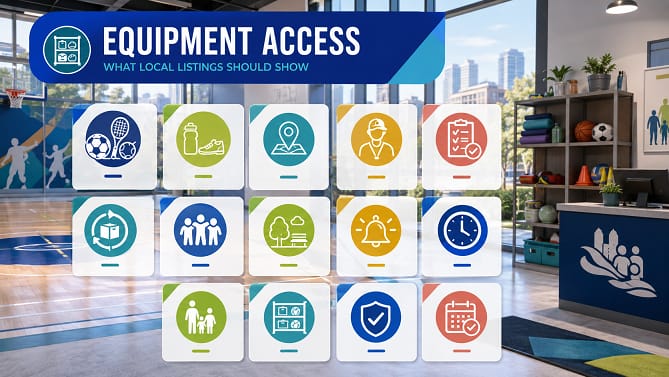
For Oakland’s Park Play Lending Library, the key verified facts are clear. The City of Oakland announced the lending library at the Larry E. Reid Sports Center in July 2026. The facility is operated through Oakland Parks, Recreation & Youth Development. Local reporting identified Maribel Lopez as a recreation supervisor connected with the project and described borrowable items such as sports balls, tennis rackets, jump ropes, yoga mats, board games, and other recreational gear.
Those facts are enough to make the listing more useful, but not enough to assume unlimited inventory. Families should still check current details with the center.
For EfficientDirectory.com, Oakland’s model sets a clear standard: listings should show equipment access beside location, programs, fields, and schedules. A sports directory becomes more useful when it tells families not only where to go, but what they can borrow, what they must bring, and what they should verify before they leave home.