
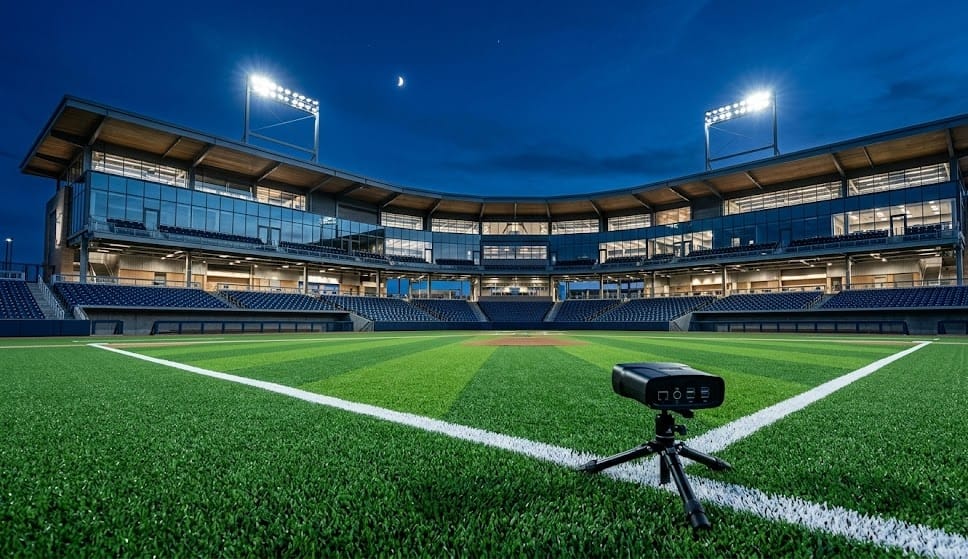
The 2026 Minor League Baseball (MiLB) season has commenced with the unveiling of a flagship class of new facilities, marking a pivotal moment in what industry analysts are calling a national infrastructure arms race. For community sports administrators and municipal stakeholders, the stakes have never been higher. Following Major League Baseball’s (MLB) 2020 reorganization and the subsequent implementation of rigorous Player Development League (PDL) standards, the “modern ballpark” is no longer defined merely by fan amenities. Instead, it is defined by its ability to serve as a high-tech laboratory for elite athlete development.
The financial scale of this shift is staggering. According to 2026 venue previews, spending on minor league stadium projects has hit a record $1.4 billion this year—nearly double the previous record set just one year ago. This surge is driven by a “comply-or-relocate” reality: teams that fail to meet new requirements for locker room square footage, female staff facilities, and specialized training areas face losing their MLB affiliation. For cities like Hillsboro, Oregon, and Richmond, Virginia, these new stadiums represent massive public-private gambles to secure their place in the professional sports ecosystem for the next several decades.
The PDL Standards Pivot And Capital Intensity
The primary engine behind the 2026 building boom is the strict adherence to Facility Standard compliance. Unlike previous eras where stadiums were primarily viewed through the lens of hospitality and luxury suites, the new class of ballparks—such as the $153 million Hillsboro Hops stadium and the long-awaited CarMax Park in Richmond—prioritizes back-of-house operations. These facilities feature expansive home team gyms, specialized “Baggage Halls” for logistics, and the first wave of sustainable synthetic turf fields specifically designed for professional-grade ball flight and player safety.
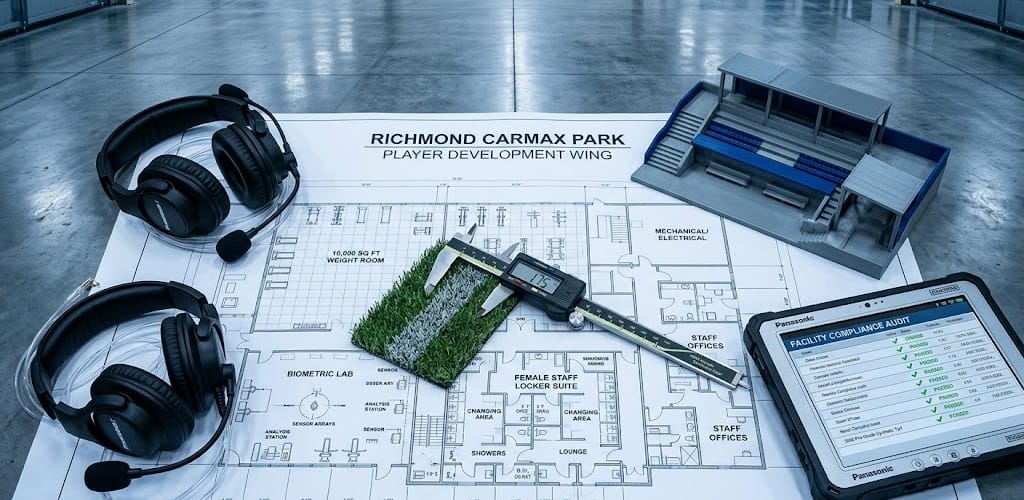
This capital intensity has shifted the conversation from “renovation” to “new construction.” In many cases, it is more cost-effective for a municipality to build a ground-up facility than to retrofit a legacy stadium with the necessary player amenities. Hillsboro’s new stadium, for instance, offers a 9,000-square-foot club area and premium player facilities that simply could not fit within their previous footprint.
| Ballpark Project (2026) | Primary Tenant | Total Investment | Capacity |
| Hillsboro Hops Stadium | Hillsboro Hops (High-A) | $153 Million | 6,000 |
| CarMax Park | Richmond Flying Squirrels (AA) | $110 Million+ | 7,500 |
| Erlanger Park | Chattanooga Lookouts (AA) | $120 Million+ | 6,000 |
| Wilson Ballpark | Wilson Warbirds (Single-A) | $76 Million | 3,700 |
The disparity in costs between these facilities highlights a secondary trend: the “right-sizing” of ballparks. While Hillsboro is pushing toward $150 million for a multi-use concert and sports hybrid, projects like Wilson Ballpark focus on intimacy and mixed-use integration, including on-site hotels that allow fans to view the action from their rooms. This diversity in strategy reflects a broader facility modernization challenge where local governments must decide if a ballpark is a standalone community asset or the anchor of a larger real estate district.
Anchoring The Mixed-Use District Model
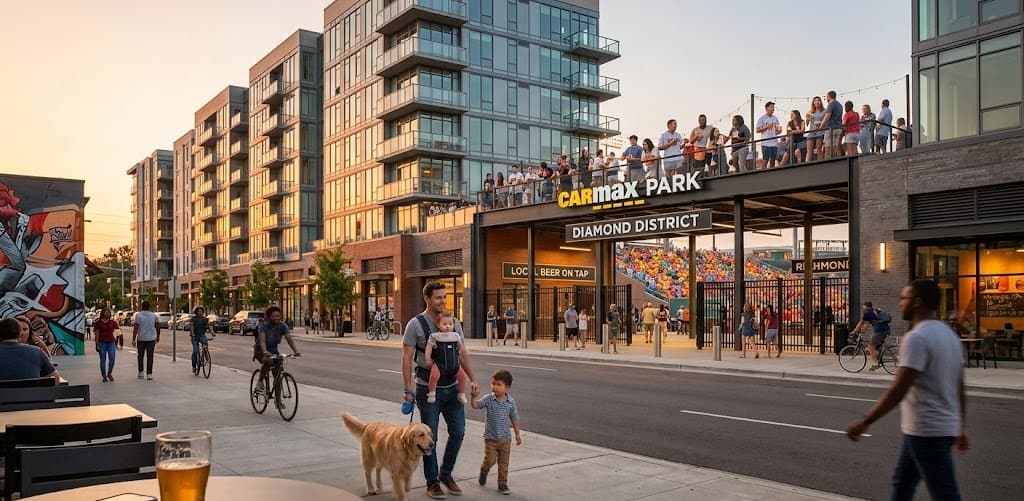
The 2026 ballpark class is almost universally characterized by “beyond the fence” development. Communities are increasingly resistant to funding standalone stadiums; consequently, the modern minor league project is usually the centerpiece of a “Diamond District” or “Sports Empire.” Richmond’s CarMax Park, for example, is the cornerstone of a large-scale residential and commercial development designed to revitalize a formerly industrial corridor. By sunken the playing field and creating a 360-degree street-level concourse, the stadium is designed to feel like a seamless part of the urban fabric rather than a walled-off fortress.
This model is also evident in Chattanooga’s Erlanger Park, built on the site of a former foundry. The design incorporates the Tennessee Riverwalk greenway, literally running the community’s infrastructure through the facility. By preserving historic structures like “The Powerhouse” and converting them into multi-level patios, teams are creating “authentic” spaces that appeal to fans who value local history alongside modern comfort. For administrators, the goal is to create community engagement models that generate revenue 365 days a year, not just during the 60 to 70 home dates of a typical baseball season.
Operational Volatility and Infrastructure Risk
Despite the aesthetic and economic promise of these new venues, the infrastructure arms race carries significant operational risk. As project costs escalate—often buoyed by inflation in raw materials and labor—the debt service on these facilities puts immense pressure on team owners to maximize yield. We are seeing a trend where teams are rapidly cycling talent and implementing experimental rule changes (such as 45-degree check-swing angles and relocated second-base bags in 2026) to increase the entertainment value and “pace of play” for casual fans.
Infrastructure failure is also a looming threat for those who cannot keep up. The Eugene Emeralds, for instance, are currently navigating a ballpark dispute that may force them out of their market by 2027, echoing the fate of the Salem-Keizer Volcanoes who were axed during the initial reorganization. For municipal leaders, the lesson of 2026 is clear: a minor league ballpark is no longer a permanent fixture; it is a high-maintenance asset that requires constant reinvestment.
The successful programs of the future will be those that view their ballpark as a “multi-use utility.” Whether hosting professional softball, high school championships, or major concerts, these $100 million-plus investments must serve a wider demographic than just the traditional baseball fan. As Hillsboro Hops President K.L. Wombacher noted during the April 7 opener, these stadiums show just how much a team feels at home in a community—but only if the community can sustain the rising cost of staying in the game