

Across many regions, community sports organizers are facing a growing and often under-discussed challenge: local leagues are losing players to the expanding footprint of professional and semi-professional sports systems.
As professional leagues invest more aggressively in development pathways, academies, and regional outreach, they are reshaping the talent pipeline—and unintentionally creating pressure on grassroots participation. For local leagues, this shift is not just about competition for elite players. It is affecting roster stability, volunteer engagement, and long-term program sustainability.
The Expanding Reach Of Professional Systems
Professional sports organizations are no longer confined to top-tier competition. Many now operate structured development programs that begin at increasingly younger ages.
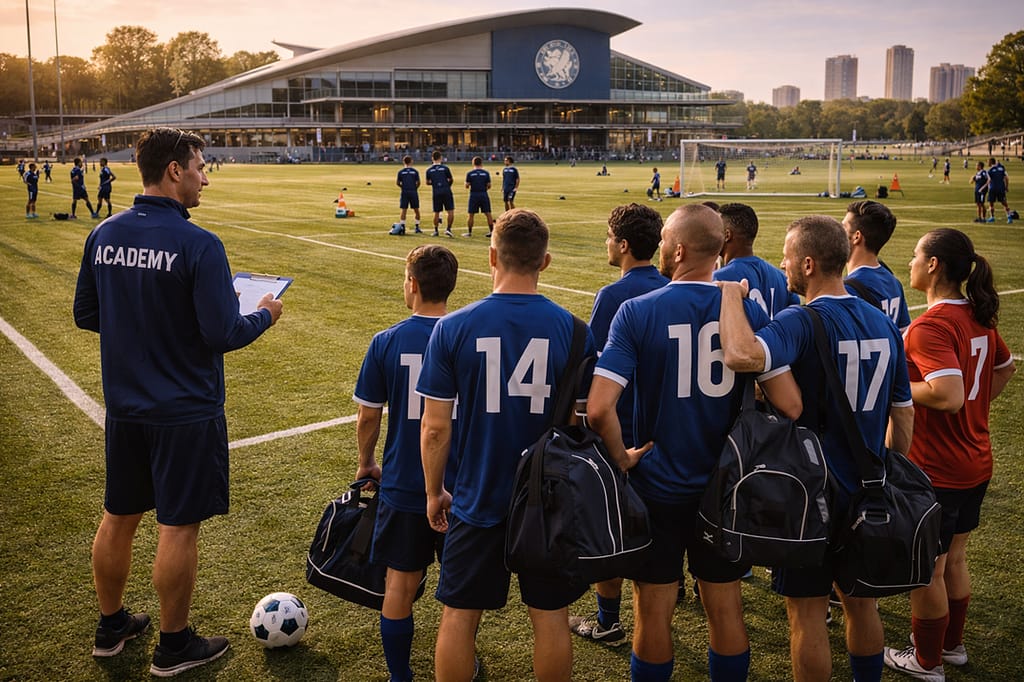
These systems often include:
- Regional academies and training hubs
- Direct scouting pipelines into youth competitions
- Access to higher-quality facilities and coaching
- Clear progression pathways toward professional careers
This expansion creates a compelling alternative for players and families, particularly those seeking structured advancement opportunities.
In practical terms, local leagues are no longer competing only with other community programs—they are competing with professionally managed ecosystems.
Talent Migration And Its Impact On Local Rosters
The most visible consequence of this shift is talent migration. Players who demonstrate early potential are often recruited into academy systems, leaving gaps in local league rosters.
However, the impact extends beyond top-tier athletes.
When stronger players exit, local leagues often experience:
- Reduced competitive balance
- Lower overall game quality
- Declining engagement among remaining participants
- Increased dropout rates across age groups
| Impact Area | Before Professional Expansion | After Expansion |
|---|---|---|
| Team Balance | Even distribution of talent | Concentrated talent in academies |
| Participation Stability | Consistent rosters | Frequent mid-season attrition |
| League Competitiveness | High engagement | Declining interest in some divisions |
| Volunteer Retention | Strong involvement | Reduced commitment due to instability |
The result is a ripple effect that affects not only players, but coaches, volunteers, and families.
The Perception Gap Between Local And Elite Pathways
One of the more subtle challenges is perception. Professional systems are often viewed as more prestigious, better resourced, and more aligned with long-term development goals.
Even when local leagues provide valuable experiences—such as community engagement, balanced competition, and flexible participation—they may struggle to compete with the perceived benefits of elite pathways.
This perception gap is difficult to address through marketing alone. It requires structural adjustments to how local leagues position themselves within the broader sports ecosystem.
Scheduling Conflicts And Participation Fragmentation
As professional and academy systems expand, scheduling conflicts become more frequent. Players are often forced to choose between local league commitments and higher-level training sessions or competitions.

This creates fragmentation in participation patterns:
- Players split time between programs
- Attendance becomes inconsistent
- Team cohesion weakens
- Coaches struggle to plan effectively
For administrators, this adds complexity to scheduling frameworks and increases the likelihood of cancellations, rescheduling, and uneven competition.
In environments already managing limited field availability, these disruptions compound existing operational challenges.
Financial And Resource Imbalance
Professional systems typically operate with greater financial backing, allowing them to offer:
- Advanced training facilities
- Specialized coaching staff
- Travel opportunities and exposure
- Branded programs that attract sponsorship
Local leagues, by contrast, often rely on volunteer-driven models and limited funding sources.
This imbalance makes it difficult to compete directly. Instead, successful leagues are beginning to differentiate themselves through community value, accessibility, and flexible participation models—areas where professional systems are less focused.
Strategic Adaptation: What Local Leagues Can Do
While the pressures are real, local leagues are not without options. Adaptation requires a shift in strategy rather than an attempt to replicate professional systems.
Key approaches include:
- Redefining success around participation and retention, not elite progression
- Offering flexible scheduling options for multi-program athletes
- Strengthening community identity and engagement
- Creating inclusive pathways for players at all skill levels
This is where alignment with broader trends—such as those explored in adult recreational league growth trends—becomes valuable. Community-based programs that emphasize accessibility and enjoyment often retain participants even as elite pathways expand.
The Role Of Governing Bodies And Policy
In some regions, governing bodies are beginning to recognize the imbalance created by unchecked professional expansion. Policies around player eligibility, dual registration, and scheduling coordination are being explored to protect grassroots participation.
Organizations like the Aspen Institute’s Project Play have highlighted the importance of maintaining strong community sports ecosystems as a foundation for long-term athlete development.
Without this foundation, the overall sports pipeline weakens—even at the elite level.
A Shifting Landscape For Community Sports
The relationship between local leagues and professional systems is evolving. What was once a clear progression path is now a more fragmented and competitive environment.
For community sports leaders, the challenge is not to resist this change, but to adapt to it strategically.
Local leagues that focus on:
- Consistent participation experiences
- Strong organizational structure
- Community-driven value
will remain relevant, even as professional systems expand.
The future of community sports will not be defined by competition with elite pathways—but by how effectively local programs redefine their role within a more complex ecosystem.