
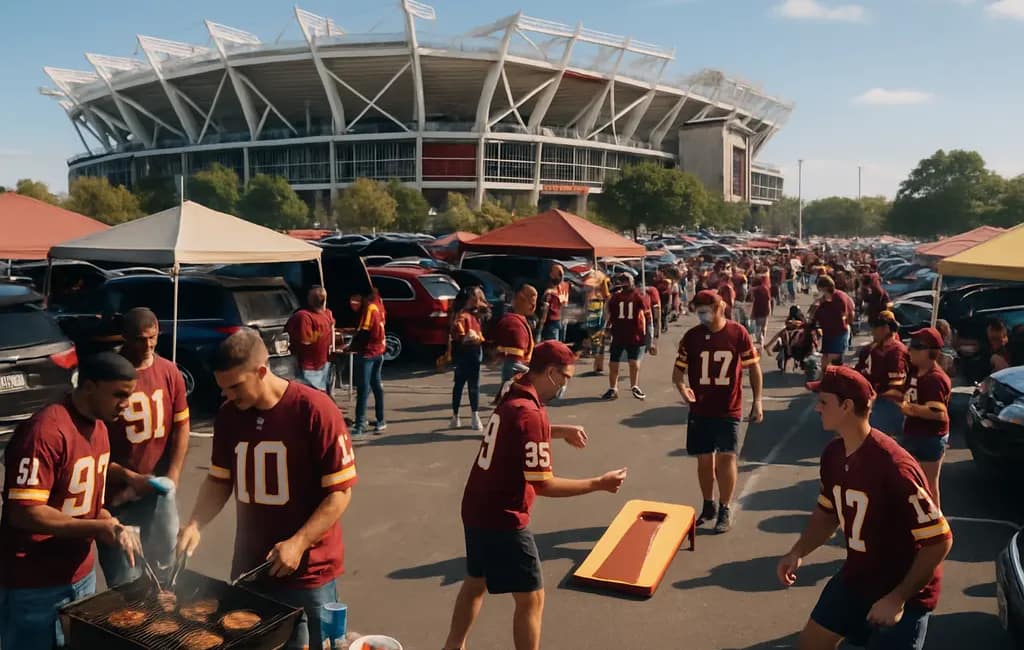
Commanders Stadium Tourism is now a practical sports travel question for Washington, D.C., not only a stadium funding debate. The D.C. Council approved the RFK redevelopment plan in September 2025, and the project is slated to include a 65,000-seat indoor stadium targeted for the 2030 NFL season. For families, visiting supporters, adult league players, and local youth sports organizers, the main issue is how a football venue becomes part of a wider event district without crowding out everyday access to fields, streets, and community programming.
The available evidence points to a large project with clear tourism ambitions and real planning risks. The proposal is not just a stadium. It includes housing, hotel rooms, restaurants, retail, green space, parking, and a sportsplex. That mix could keep visitors in the city for longer stays, especially if the district hosts concerts and special events outside the NFL schedule. Still, projections should be read as estimates, not guarantees. Attendance, event bookings, visitor spending, and public return will depend on execution, transit management, pricing, neighborhood access, and how well the site serves residents between headline events.
Commanders Stadium Tourism Starts With The RFK Plan
The RFK project was approved as a $3.7 billion redevelopment, with the Commanders contributing $2.7 billion and public spending of about $1.1 billion for stadium infrastructure, housing, green space, and a sports complex, according to The Washington Post. The stadium is planned as an indoor venue with 65,000 seats and is slated to open for the 2030 NFL season. From a sports tourism perspective, the roof matters because indoor facilities can support more event types across more months of the year, though actual bookings have not been established in the research provided.
Commanders Stadium Tourism Demand Is Event-Led
Commanders Stadium Tourism will depend less on one NFL Sunday and more on the full event calendar. The RFK economic impact analysis describes a mixed-use district of roughly 180 acres, with about 6,477 multi-family housing units, 800 hotel rooms, more than 376,000 square feet of restaurant and retail space, a sportsplex, green space, and around 8,200 parking spaces. The same analysis projects the completed stadium could host around 28 to 29 ticketed events and more than 200 private events each year, drawing about 1.4 million annual attendees RFK economic analysis.
That distinction is useful. A stadium that hosts fewer than 30 ticketed events can still affect tourism if those dates bring high-spending visitors, hotel demand, media attention, and repeat trips. Private events may support weekday activity, but they tend to produce a different public footprint than NFL games, international soccer matches, concerts, or college football showcases. For DC, the tourism value will likely be measured by event quality, visitor origin, length of stay, and how spending reaches local businesses, not by attendance alone.
Why The Mixed-Use District Matters
A stand-alone stadium can create short bursts of traffic and spending. A district with hotels, restaurants, retail, housing, and public space can spread activity across a longer window, which is why the RFK plan is significant for sports travel analysis. Visitors who can stay near the event site may spend more time in the district before and after games. That can reduce some cross-city movement, but it can also concentrate demand around one neighborhood. The 800 planned hotel rooms could help capture overnight stays tied to NFL weekends and other events, while restaurant and retail space could keep spending close to the stadium.
For local sports families, the sportsplex and green space are just as important as the stadium bowl. As a youth sports registrar, I look at large projects through a participation lens: do families gain more usable places to play, practice, gather, and volunteer, or does the site mainly serve ticketed visitors? The research supports the presence of a sportsplex and green space, but it does not provide operating rules, youth allocation policies, fee schedules, or booking priorities. Those details will shape whether the district supports community sports in a steady way.
Event Volume, Hotels, And Matchday Movement
The projected annual attendance of about 1.4 million people gives planners a clear reason to focus on transportation, lodging, pedestrian movement, and event-day staffing. In practical terms, Commanders Stadium Tourism would place new pressure on arrival windows, parking access, rideshare zones, transit capacity, neighborhood streets, and post-event exits. The planned 8,200 parking spaces are part of the site concept, but parking supply alone does not solve event flow. Stadium tourism depends on how visitors move between hotels, transit stations, restaurants, and the gates.
What Sports Travelers May Change
Sports travelers behave differently from routine commuters. They often arrive in groups, carry bags or team gear, eat before or after an event, and may not know local street patterns. That makes signs, lighting, pedestrian routes, accessible paths, and clear pickup locations central to the visitor experience. It also affects residents, since an event district must function on school nights, youth practice days, and normal workdays. The project’s scale means DC would need event operations that work for both visiting fans and the people who live near RFK.
The site’s indoor design could make the calendar more flexible. Concerts and special events can be scheduled outside the NFL season, which may reduce reliance on a small number of football dates. That is a sports-business strength, but it also raises a community management question: how many high-attendance events can the district absorb without disrupting neighborhood routines? The research provides projections, not final operating calendars, so the safer conclusion is that the stadium could increase event-driven travel if bookings, access, and visitor services match the plan.
How DC Fits Broader Sports Tourism Patterns
Large venues often create travel effects beyond the gate count. Hotels, restaurants, public agencies, amateur sports organizers, and transit providers all adjust to event weeks. A related analysis of sports tourism and fan participation notes how major events can reorganize local movement and business demand. DC’s RFK proposal fits that pattern, but with a distinctive civic challenge: the stadium district is being planned beside broader public uses, including housing and green space.
That mixed purpose should keep the analysis cautious. Tourism gains are not automatic. Some spending can shift from one part of the city to another rather than represent entirely new activity. Some visitors may attend an event and leave quickly. Some private events may have limited neighborhood benefit. The strongest case for Commanders Stadium Tourism rests on repeat event use, overnight stays, and nearby spending that adds to DC’s existing visitor economy rather than simply moving it around.
Community Access And Sports Participation

Sports tourism is often discussed through hotels and tax revenue, but community access deserves equal attention. If RFK becomes a destination for NFL games, concerts, and special events, local families will still need reliable access to practice fields, safe pedestrian routes, and affordable sports programming. A stadium district can feel open or closed depending on how public spaces are scheduled, maintained, and staffed.
The research includes projections of major economic output and jobs. Over a combined 30-year construction and operations period, the project is estimated to generate about $24.2 billion in total economic output and $4.2 billion in personal earnings for D.C. workers. It also projects about $5.1 billion in tax revenue over that span, including property, sales and ticket, income, and hotel taxes. During construction, the project is estimated to support about 30,000 construction jobs across the stadium and mixed-use development phases. These are meaningful figures, but they are estimates tied to assumptions about development, attendance, and operations.
Participation Benefits Need Clear Rules
For youth and adult recreational leagues, the most useful benefits would be practical: field time, safe drop-off zones, restrooms, lighting, storage, weather policies, and predictable booking procedures. A sportsplex can help if local leagues can use it at realistic times and costs. It is less helpful if it is mainly reserved for private events or high-priced rentals. The research does not answer that access question, so public reporting should avoid assuming benefits that have not been defined.
Community engagement also includes information sharing. Families need clear schedules, construction updates, and event-day access notices well before a major matchday or concert. Adult leagues need enough notice to move games if streets, parking, or public space are limited. Local sports networks, including community-focused sites like Banat Zayed, play a crucial role in helping residents better understand the impact of major sports projects on participation beyond tourism alone.
- For visitors: the key measures will be hotel access, transit clarity, event variety, and post-event movement.
- For residents: the key measures will be public space access, traffic controls, youth sports availability, and neighborhood services.
- For DC officials: the key measures will be tax return, job quality, infrastructure performance, and transparent reporting against projections.
Commanders Stadium Tourism In DC
The strongest evidence-based reading is that Commanders Stadium Tourism could make RFK one of DC’s central sports travel sites by 2030 and beyond, provided the stadium opens as planned and the district attracts a steady event calendar. The approved project has the scale to change visitor patterns: a 65,000-seat indoor stadium, hotel rooms, restaurant and retail space, housing, parking, green space, and a sportsplex on roughly 180 acres. The projections for annual attendees, private events, economic output, and tax revenue show why city leaders view the site as a tourism asset.
The caution is just as clear. Sports tourism success will not be proven by approval documents alone. It will be tested by event operations, resident access, youth and adult sports availability, hotel performance, and whether public benefits can be measured after the stadium opens. DC has a chance to build a stadium district that serves visiting fans and local athletes. The evidence supports that possibility, but the final result will depend on execution between the 2025 approval and the planned 2030 NFL season opening.