

For families and volunteer coaches, college soccer development is both a dream and a pressure point. The college game can open doors, build discipline, and keep players connected to education. It can also expose gaps in access, roster opportunity, and long-term growth. I see that tension often at the community level: parents ask what pathway is realistic, players chase visibility, and coaches try to balance ambition with honest feedback.
The challenge is not one single problem. The research points to several connected issues: a small share of high school players reaching college soccer, uneven athletic department finances, limited scholarships, international recruiting pressure, and a compressed match calendar that can reduce training time. None of those points means college soccer is failing. It does mean the system asks a lot from players and families before they know whether the payoff is likely.
As a volunteer coach, my view is cautious. College soccer should not be sold as the only measure of youth success. A better discussion starts with evidence, then moves toward what local clubs, high schools, and families can actually control.
Why College Soccer Development Is Under Strain
College Soccer Development And Access Signals
The access numbers are sobering. In 2025–26, about 5.9% of boys who played high school soccer went on to compete at the collegiate level, according to NCAA data cited by a Front Office Sports report. That figure should shape how coaches talk with players. The pathway exists, but it is narrow, and families should hear that early enough to plan with care.
That does not make the college target unrealistic for strong, committed players. It does mean college soccer development can feel less like a broad player-growth system and more like a selection funnel. The distinction matters. A growth system serves many players by improving habits, tactical understanding, physical preparation, and love for the sport. A funnel mostly sorts players by visibility, readiness, money, and timing.
Community coaches can help by separating two messages. First, college soccer can be a valid goal. Second, youth training should not be built only around that goal. Players who do not reach college still deserve quality coaching, good competition, and a positive team experience.
Financial Pressure Behind The Touchline
The broader financial picture also affects the college game. The U.S. Government Accountability Office reported that, in the 2023-24 academic year, Division I schools spent $20.8 billion on athletics while generating $13.1 billion in revenue, and about 94% of Division I programs spent more than they brought in, according to the GAO report. Soccer programs operate within that wider athletics budget reality.
Those figures do not tell us exactly how each soccer program made decisions. They do support a cautious reading: many athletic departments face real budget pressure. In that setting, roster size, travel, staffing, facilities, and scholarship allocation can become practical constraints rather than pure development choices.
On October 16, 2025, U.S. Soccer’s NextGen College Soccer White Paper identified NIL, conference realignment, and growing professional leagues as pressures affecting player development and financial sustainability. Those pressures sit above the local coach’s pay grade, but they reach local families through recruiting timelines, program stability, and the value placed on college soccer compared with professional options.
Competitive Imbalance Starts Before Campus
Roster Competition And Scholarship Math
Competitive imbalance in college soccer does not begin on the first day of preseason. It starts years earlier, in who can afford club fees, travel, showcases, private training, and recruiting exposure. Once players reach the college market, the math gets tighter. The research notes show that Division I men’s soccer programs may award up to 9.9 equivalency scholarships, which coaches often divide among multiple players rather than giving full awards.
For college soccer development, this creates a difficult mix: limited aid, high roster competition, and different levels of family resources. A player may be talented enough to help a program but still face cost barriers. Another may have the resources to attend more events and make more recruiting contacts. Coaches should be careful not to treat exposure as the same thing as ability.
International recruiting adds another layer. The research notes report that, as of the 2025–26 season, 33.8% of Division I men’s soccer roster spots were held by international players, while the Division I women’s share was 12.4%. In 2025 championship tournaments, international shares were also high in several men’s college divisions, with Division III described as majority domestic. Those figures should not be reduced to a complaint about international players. Many are excellent students and teammates. The fair question is whether the U.S. domestic pathway is developing enough players who are ready for those same roster spots.
What Volunteers Can Control
Local coaches cannot rewrite NCAA rules. We can change how we prepare players and communicate with families. A practical approach starts with transparency: explain the difference between Division I, Division II, Division III, NAIA, and junior college options without pretending one pathway fits every athlete.
- Train decision-making early: small-sided games, scanning habits, and position-specific cues help players solve problems without waiting for sideline commands.
- Reduce pay-to-be-seen pressure where possible: clubs and schools can share video, host local college nights, and help families compare realistic options.
- Value academic fit: college selection should include degree interest, campus support, travel demands, and cost after aid.
- Track development, not only wins: minutes, role clarity, technical growth, and resilience are better youth markers than weekend trophies alone.
For readers comparing local pathway ideas, this related analysis on soccer development and volunteer access connects national leadership questions with the everyday work of community coaches.
Player Development Needs Better Rhythm
The Compressed Calendar Problem
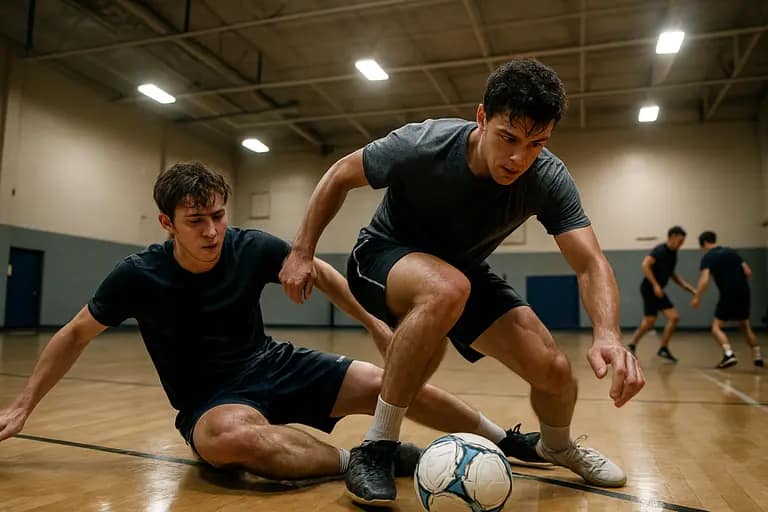
The traditional men’s college soccer season has been described in the research as a compressed four-month fall schedule. Critics argue that playing multiple matches a week, at times with under 48 hours of rest, can raise injury risk and reduce recovery and development time. That claim should be read carefully: different programs manage workloads differently, and the research does not prove every team has the same risk profile. Still, the concern is reasonable from a coaching standpoint.
If college soccer development is judged by long-term player growth, training rhythm matters. Players need technical repetition, tactical teaching, strength work, sleep, and recovery. A schedule dominated by matches can turn coaching into short-term management: prepare, play, recover, travel, repeat. That can be exciting for competition, but it may leave less room for skill correction and role education.
The professional-transition question adds more pressure. Recent research cited in the notes argues that college players often begin professional careers at age 21 or 22 after graduation, while players in many other countries may move toward professional environments by age 18. That gap does not mean every college player is behind. It does raise a fair question for elite male prospects: is college the best setting for their timeline, or one option among several?
Different Pathways For Men And Women
The women’s game needs its own analysis. The research notes say the college pathway remains a primary source of elite development for women, with U.S. Soccer data suggesting about 85% of top-level female players have college soccer experience, compared with closer to 50% for male players. That difference should shape policy debates. A change that might help one side of the game could affect the other side in a different way.
For girls and young women, college soccer can still be a central route to high-level competition, education, and later professional opportunity. For boys and young men, the pathway has more direct competition from academies and pro clubs. Good coaching advice should reflect that split rather than speak about “college soccer” as if every athlete faces the same market.
Talent identification has also expanded beyond the old showcase model. As of late summer 2026, U.S. Soccer’s Talent Identification network had tracked roughly 8,000 unique players from August 2025 through July 2026, with 1,276 unique Youth National Team camp call-ups and about 40% of those being first-time call-ups. That suggests more players are being seen, but it does not answer whether access is equal across geography and income. Local communities still have work to do.
Community Steps For U.S. College Soccer
Questions Families Can Ask
A healthier college soccer development model starts with better questions. Families can ask college coaches how they use video, how many players at a position are already on the roster, what typical aid packages look like, and how the program balances match congestion with recovery. They can also ask how often first-year players train with the main group, because development is not only about being listed on a roster.
High school and club coaches can support this by keeping honest player evaluations. That includes strengths, gaps, physical profile, academic fit, and likely level. It may feel uncomfortable to tell a player that a target school is a stretch, but clear feedback is kinder than vague optimism. Players can still chase ambitious goals while building practical options.
Community engagement matters, too. Local soccer leaders should share field space, keep coaching education affordable, and create events where families can learn without paying premium travel costs. For broader sports-community context, our network’s SCAR Sports coverage provides insights into related issues across athletics and access.
The college game still offers meaningful value. It can link sport with education, challenge players in a team setting, and give late developers time to grow. The task now is to make the pathway more honest, less dependent on family resources, and more aligned with player learning. If coaches, parents, schools, and federations keep the conversation grounded in evidence, U.S. soccer can protect what college soccer does well while addressing the imbalance that limits too many players before they ever reach campus.