

The commercial viability of ice hockey at the grassroots level has encountered an unprecedented operational turning point following a landmark multi-year global partnership announced on May 20, 2026, between the National Hockey League (NHL) and Honeywell. Designating Honeywell as the Official Building Automation and Energy Management Partner of the NHL, the collaboration targets one of the most persistent financial crises facing local sports infrastructure: the escalating energy demands and operational overhead of local community ice rinks. Under the strategic direction of David Lehanski, NHL Executive Vice President of Business Development and Innovation, and Juan Picon, President of the Americas for Honeywell Building Automation, the project introduces a sophisticated industrial technology framework engineered to stabilize the economic foundations of amateur hockey environments across North America.
Maintaining a functional sheet of ice requires an extraordinary amount of capital, as ice refrigeration loops are inherently among the most energy-intensive subsystems in municipal and private recreation management. Rink operators must continuously balance extreme thermal variables—managing sub-freezing surface thresholds while adjusting for ambient outdoor humidity and indoor spectator loads. As global energy prices face persistent volatility, these underlying facility maintenance expenditures create massive budget deficits for local programs. Because community sports boards operate on narrow financial margins, these structural cost surges are routinely transferred directly to families through inflated ice rental fees and registration prices, limiting the overall accessibility of the sport.
Structural Challenges In Legacy Ice Rink Infrastructure
The primary vulnerability within the North American hockey landscape stems from a systemic facility deficit. Approximately 80% of the community ice rinks currently operating across the United States and Canada are at least 25 years old. Engineered during an era of inexpensive utilities and primitive climate control standards, these legacy structures rely heavily on outdated pneumatic equipment, manually calibrated mechanical compressors, and highly inefficient insulation boundaries. According to data highlighted by Greg Turner, Chief Solutions Engineering Officer at Honeywell Building Automation, municipal ice rinks have experienced baseline utility price increases ranging from 11% to as high as 70% in high-tariff jurisdictions over recent seasons. This compounding inflation threatens to trigger widespread facility closures if left unaddressed.
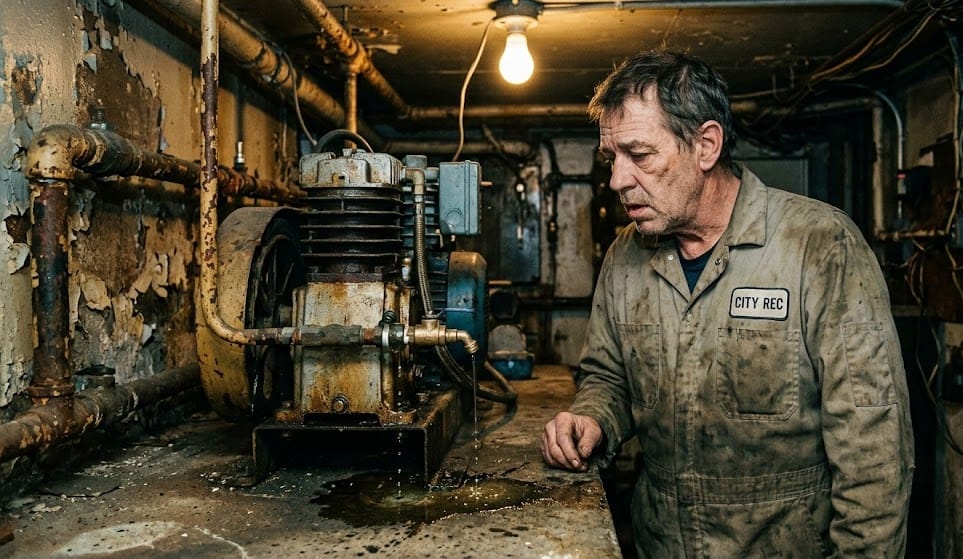
When facility managers confront escalating electricity and water bills, their typical administrative defense is entirely reactive. Programs are frequently forced to reduce public skating blocks, defer critical equipment maintenance, or cap local league registrations to contain variable costs. This defensive scaling reflects the broader sports facility modernization challenges visible across multiple municipal recreation domains, where historical public infrastructure struggles to adapt to modern sustainability metrics. Rather than relying on localized patches or temporary municipal subsidies, the stabilization of these vital community assets requires a centralized transition toward intelligent, automated building infrastructure.
| Operational Performance Metric | Legacy Infrastructure Standard | Honeywell Automation Target (2026+) |
| Systemic Energy Control | Manual calibration; uncoordinated thermal loops | AI-driven unified system automation |
| Utility Overhead Trajectory | 11% to 70% unmitigated cost escalation | 15% to 25% targeted operational reduction |
| Maintenance Protocol | Reactive physical inspection; delayed repairs | Real-time predictive analytics and monitoring |
| Asset Lifecycle Management | High compressor stress; premature system burnout | Automated load optimization and load-balancing |
By gathering precise real-time performance indicators, local administrations can shift from a defensive operational stance to a predictive asset management model, safeguarding both physical ice sheets and long-term organizational budgets.
Implementing Artificial Intelligence and Automation Solutions
The operational core of the NHL-Honeywell initiative relies on the deployment of advanced software-as-a-service platforms, specifically Honeywell Forge. This cloud-based, artificial intelligence software acts as a centralized brain for the facility, integrating traditionally isolated subsystems—including refrigeration plants, high-intensity dehumidification units, smart LED lighting, and security access points—into a single, coordinated building ecosystem. Rather than operating expensive compressors at maximum output regardless of building density, the software uses predictive insights to automate thermal scaling based on real-time occupancy counts, internal heat load variations, and external meteorological forecasts.
This high-precision environmental tuning is critical for maintaining structural ice integrity during high-volume sports tournaments. For example, when hundreds of players and spectators enter a venue during a weekend showcase, the sudden influx of human body heat and humidity can rapidly compromise surface hardness. The AI platform anticipates these spikes by analyzing continuous data streams, automatically adjusting the refrigeration chilling loop prior to the crowd’s arrival without overtaxing the power grid. By calibrating facility infrastructure to dim lighting in vacant locker rooms and adjust temperature variables dynamically, the system protects the venue’s core energy efficiency of hockey facilities while actively flattening the peak-demand spikes that drive institutional utility billing.
The Financial Cascade: Reallocating Savings to Grassroots Programs
The ultimate utility of this technological integration extends far beyond industrial engineering; it functions as a critical mechanism for long-term participant retention. Slashing a community rink’s baseline utility expenses by 15% to 25% produces an immediate financial cascade that directly benefits local youth sports boards and recreation districts. When an operator secures significant savings on overhead, those preserved capital reserves can be reallocated directly into local league development. This allows volunteer boards to expand subsidized equipment programs, fund entry-level coaching clinics, and mitigate the rising registration costs that frequently push families out of the sport.

Furthermore, the operational data harvested across diverse North American venues through this multi-year initiative will establish the foundation for what the NHL and Honeywell define as the “Rink of the Future.” This forward-looking framework aims to deliver a standardized, scalable architectural blueprint for next-generation recreation venue design. By proving that advanced building automation can transform highly complex, energy-heavy buildings into financially self-sustaining and environmentally responsible community assets, this partnership introduces a new standard of structural governance. In a landscape where municipal recreation budgets face continuous scrutiny, demonstrating that specialized local assets can operate with maximized fiscal efficiency is essential to ensuring ice sports remain affordable, accessible, and viable for generations to come