

Early in the 2026 Minor League Baseball season, volatility has become the defining theme across multiple farm systems. Affiliates tied to organizations like the New York Mets and Milwaukee Brewers have experienced extreme swings in performance—ranging from dominant pitching shutouts to high-scoring blowouts within the same week.
Reports from April 2026 highlight how Mets affiliates such as Syracuse (Triple-A), Binghamton (Double-A), and Brooklyn (High-A) have delivered inconsistent results game-to-game, reflecting deeper instability in prospect development cycles. This is not simply a matter of early-season rust—it signals a structural shift in how teams evaluate, deploy, and develop talent.
For minor league operators and community sports administrators, this volatility is forcing a reassessment of strategy, expectations, and long-term planning.
Why Prospect Performance Is Becoming More Unpredictable
Modern player development systems are built around rapid evaluation. With advanced analytics tracking every pitch, swing, and defensive movement, prospects are now assessed continuously rather than over extended periods.

This has introduced a new dynamic: players are often pushed aggressively through development levels, sometimes before performance stabilizes.
Key contributors to volatility include:
- Accelerated promotion timelines
- Increased reliance on data-driven decision-making
- Reduced tolerance for prolonged underperformance
- Frequent roster adjustments across affiliates
| Development Factor | Traditional Model | Current Model |
|---|---|---|
| Evaluation Period | Full season or longer | Continuous, real-time |
| Promotion Timing | Gradual progression | Rapid advancement or demotion |
| Performance Stability | Prioritized | Secondary to projection |
| Roster Consistency | Moderate | Highly fluid |
This approach prioritizes long-term upside—but often at the expense of short-term consistency.
The Mets System As A Real-Time Case Study
In April 2026, Mets affiliates provided a clear example of this volatility. Game reports showed dramatic fluctuations:
- High-scoring offensive outbursts followed by low-production games
- Pitching performances alternating between dominant and inconsistent
- Frequent lineup changes tied to player movement
These patterns are not isolated. They reflect a broader league-wide trend where prospects are evaluated as part of a system rather than as fixed contributors to a single team.
For local affiliates, this creates an environment where team identity and performance can shift rapidly from week to week.
How Teams Are Adapting Strategically
Faced with unpredictable performance, minor league teams are adjusting their operational strategies.

Rather than building around stable rosters, teams are focusing on:
- Flexible game planning based on available talent
- Adaptive coaching approaches tailored to individual development needs
- Increased communication between affiliates and parent organizations
This has transformed the role of minor league coaching staff. Coaches are no longer just preparing teams to win games—they are managing constantly evolving rosters while supporting individual player growth.
This shift aligns with broader trends in technology-driven league management, where data and adaptability are central to operations.
The Trade-Off Between Development And Competitive Balance
Prospect volatility introduces a clear tension between two objectives:
- Developing players efficiently
- Maintaining competitive and engaging team performance
| Objective | Benefit | Challenge |
|---|---|---|
| Player Development | Faster progression of top prospects | Inconsistent team results |
| Competitive Balance | Engaging fan experience | Difficult to sustain with roster changes |
| System Efficiency | Optimized talent pipeline | Reduced stability at affiliate level |
For organizations, development typically takes priority. However, this can create challenges for minor league teams that rely on consistent performance to maintain fan engagement.
Impact On Fan Experience And Community Engagement
For local communities, volatility affects more than just win-loss records. It changes how fans experience the team.
Frequent performance swings and roster changes can lead to:
- Difficulty forming connections with players
- Reduced predictability in game quality
- Shifts in expectations from competitive success to entertainment value
This is why many organizations are doubling down on branding and community engagement rather than relying solely on on-field performance.
The approach reflects lessons seen in community engagement models in minor league baseball, where identity and experience become central to sustaining fan interest.
Coaching Under Constant Change
The coaching environment in minor league systems has become significantly more complex. Coaches must balance:
- Individual player development goals
- Team performance expectations
- Rapid roster changes and role adjustments
This requires a shift from traditional coaching models to more flexible, communication-driven approaches.
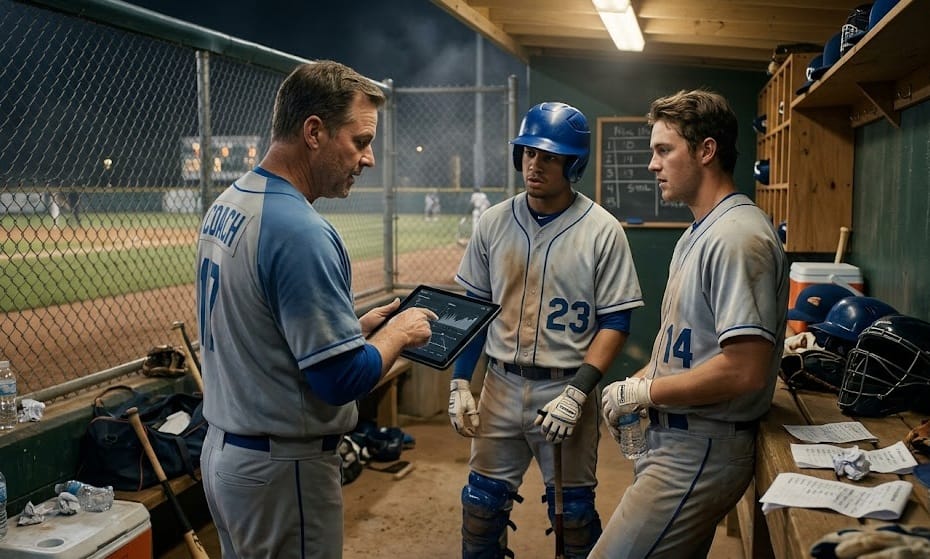
In practice, this means:
- Shorter feedback loops with players
- Increased use of analytics in daily decision-making
- Greater emphasis on mental resilience and adaptability
Coaching is no longer about consistency—it is about managing change effectively.
What This Means For Local And Amateur Systems
The volatility seen in minor leagues has downstream effects on local and amateur sports systems. As development models shift, expectations for young athletes also change.
Local leagues may begin to emphasize:
- Versatility over specialization
- Adaptability in player roles
- Exposure to multiple competitive environments
These shifts reflect the reality that progression pathways are becoming less linear and more dynamic.
A New Strategic Reality For Minor League Baseball
Prospect performance volatility is not a temporary phenomenon—it is the result of systemic changes in how baseball organizations approach development.
For minor league teams, the challenge is clear: operate effectively in an environment where stability is no longer guaranteed.
Success will depend on:
- Organizational adaptability
- Strong communication between affiliates
- A focus on experience and engagement beyond performance
For community sports leaders, the lesson is equally important. As higher-level systems evolve, local programs must prepare athletes—and organizations—for a future defined by flexibility and rapid change.