

Searching for local sports leagues can feel like trying to solve a Rubik’s Cube blindfolded. You know there’s a solution, but it’s hard to find. Websites are outdated, and skill levels are confusing.
I’ve been through this myself, from dodgy co-ed volleyball to intense lacrosse. Now, I’m here to help you find your perfect team. We’ll use the same precision as a Moneyball statistician.
We aim to get you off the couch and into a game you’ll love. No more joining teams that are too serious. It’s time to find your sporting tribe.
Benefits of Joining Local Leagues
Let’s face it – your fitness tracker has been judging you after that New Year’s resolution failed. But, there’s a better way to stay active that doesn’t involve staring at a screen all day.
Joining local league sports does more than just burn calories. It helps you make real friends in a world where connections are hard to find. It’s a way to break free from our digital traps and find actual human connection.
The mental benefits are huge. You get to exercise without the boredom of solo workouts. You also make friends without the awkwardness of small talk. Instead, you connect over shared experiences like missing a catch or hitting a three-pointer.
Here are some real benefits:
- Mental health boost: Regular exercise with others reduces stress more than any app
- Community integration: You become a part of your neighborhood, not just a resident
- Skill development: Learn new things that aren’t about work or school
- Natural networking: Make real friends without the fake atmosphere of work events
This idea is simple yet powerful. While everyone else is stuck in their digital world, you’ll be enjoying real moments. You’ll get high-fives, laugh with friends, and feel a sense of belonging that’s hard to find online.
So, why join local league activities? It’s a chance to put down your phone and pick up a ball. You’ll find your tribe in a world that’s always rushing by. And you might just remember what it’s like to be part of something bigger than yourself.
Where to Search (Online, Community Centers)
Finding local sports leagues is like being a detective and a museum archivist at the same time. You’ll search online and in community centers. Both places are important for finding community clubs.
The internet is your first stop. Look at sports organization websites for details. The Barrie Bombers Jr. Lacrosse website has everything you need, including schedules and how to join.
Football fans should check the Simcoe County Rovers FC website. It’s well-organized and easy to use, making it simple to find a team.

But don’t forget to look in person. Community centers are the heart of local sports. Places like the Peggy Hill Team Community Centre have bulletin boards with sports opportunities.
Community centers often have info not found online. You can find volleyball leagues, softball tournaments, and basketball games. It’s like digging for treasure.
Pro tip: Always check both online and in person. Some clubs have little online presence but are active locally. Others update their websites but forget about bulletin boards.
Your search strategy should include:
- Checking organization websites weekly for updates
- Visiting multiple community centers in your area
- Asking center staff about upcoming leagues
- Looking for seasonal postings (leagues often change with seasons)
Finding the right community clubs requires both online skills and old-fashioned effort. Use both methods, and you’ll find great sports opportunities and community connections.
Questions to Ask Before Joining
Joining a local sports league is a big deal. It’s not something you can easily quit. You need to think carefully before you sign up. Ask the right questions to avoid regret.
First, check the skill level. League descriptions can be tricky. “Intermediate” might mean you’re good, while “Recreational” could mean you’re just there to have fun.
The time of games also tells you a lot. Intermediate leagues usually play at 7PM. Recreational games are often at 9PM. This shows who’s serious and who’s just there for fun.
It’s also important to know the league’s culture. Are mistakes okay or frowned upon? What happens after the game? Is it beers at the pub or protein shakes in the parking lot?
Here are key questions to ask:
- Skill level reality check: “Would someone who played in high school dominate this league?”
- Time investment: “Are we talking 60 minutes of play or 45 minutes of waiting for someone to find the game ball?”
- Social atmosphere: “Is this more about competition or conversation?”
- Equipment expectations: “Do I need professional gear or will my college intramural shirt suffice?”
Getting answers to these questions helps you decide if it’s the right fit. I learned this the hard way when I joined my first local sports league after moving. The culture was more important than my skills.
The best local sports leagues are about more than just playing. They’re about finding friends, getting into a rhythm, and sometimes, learning to laugh at yourself after a bad catch.
Age Groups and Divisions
Choosing where to join local league is like picking your demographic battlefield. Get it wrong and you’ll feel out of place. The stratification here would make a social anthropologist swoon with delight.
Most leagues sort players into categories that make sense. You’ve got Jr. B Lacrosse for the young guns. Then there are co-ed leagues for players who remember Michael Jordan’s basketball days.
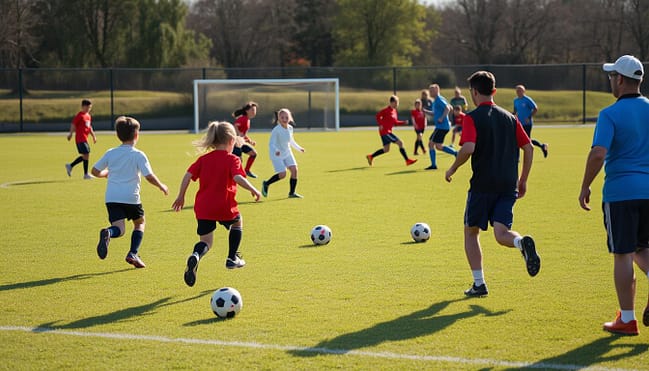
The time slot selection reveals more about the player demographic than any application form. The 6:30PM game is for families. The 7:30PM slot is for those who just need one drink after work.
The 9:30PM games are for child-free professionals. They’ve escaped work emails and are ready to unleash their competitive energy. It’s like a support group for those who miss college athletics but have bad knees and good health insurance.
Here’s what you’re really choosing between when you join local league:
- Youth divisions where the primary injury risk is enthusiasm
- Co-ed leagues that mix competitive spirits with social lubrication
- Age-specific brackets that ensure nobody feels like a historical relic
- Skill-based tiers that prevent embarrassing mismatches
The smart move? Scout a game first. Watch the warm-ups. If you see more knee braces than tattoos, you’ve found your people. If everyone looks like they could make their college team, try the next division down.
Your perfect league division isn’t about your age. It’s about your recovery time, commitment level, and how badly you need to win versus socialize. Choose wisely, or you’ll spend your season feeling like you accidentally wandered into the wrong reality.
Registration Process
Getting into local sports leagues is like planning a military mission. But, you get to wear better shoes. The calendar is your guide, and those dates are set in stone.
January 2nd and 7th are deadlines you can’t ignore. They’re as serious as tax season. With only a few spots available, signing up is a race, like getting on a subway during rush hour.
Winter leagues start on November 12th at 10:00 AM. It’s like the release of a new Marvel movie. You can’t just browse; you need to act fast.
Pro registration strategy: have your payment ready and your browser refreshed. It’s like trying to buy Hamilton tickets. The early bird gets everything.
Missing registration deadlines is like showing up to a fight unarmed. You look ready, but you’re not prepared for the battle ahead.
Community clubs have a strict schedule, like a Swiss watch. You need to be on time to fit in.
Tuesday leagues fill up quickly, like free office pizza. The competition is real, and spots are limited. It’s a phenomenon that would interest behavioral economists.
Set alarms, have your credit card ready, and practice your clicking. This is the new way to secure your spot in local sports.
Making Friends
Local sports leagues offer something gyms can’t: built-in friendship algorithms. Forget swiping right on dating apps – here you bond over shared suffering and occasional victory.
Community centers become your modern-day third place. That magical realm between work and home where you can be your moderately athletic, highly competitive self. These spaces transform strangers into teammates faster than any corporate retreat icebreaker.
The team structure creates what I call forced bonding. You’re stuck with these people for a season, whether you like it or not. This accidental intimacy works better than any algorithm for making genuine connections.
Consider these friendship-building moments that local sports leagues naturally create:
- Shared suffering – Nothing bonds people like collectively losing by 20 points
- Post-game rituals – Those awkward drinks that turn into real conversations
- Practice banter – The inside jokes that only your team understands
- Season-long arc – Watching each other improve creates mutual respect
The beauty of these local sports leagues? They’re social engineering through athleticism. You think you’re joining for exercise, but you’re really signing up for:
Weekly social events with built-in conversation starters. Instant common ground with diverse people. Natural progression from teammates to actual friends. It’s like a support group with more sweating and less sharing.
These community-based local sports leagues understand something fundamental: adults suck at making new friends. We need structure, shared goals, and regular contact – exactly what team sports provide.
The best local sports leagues create environments where friendship happens almost accidentally. You show up for the game, but stay for the people. It’s the most effective social network nobody talks about.
Conclusion: Get Active in Your Community
Joining a local league is more than just staying fit. It’s a way to fight against feeling isolated from the world. Your phone can’t replace the thrill of a great pass or the disappointment of missing a shot.
Community clubs give you something digital platforms can’t: real connections with people. These places are where you can start anew, no matter the season. Studies show that playing sports in your community really helps and strengthens friendships.
The excitement of cheering for your team is more than just fun. It’s about remembering to be part of a community, not just a consumer. Your future teammates are waiting for you, whether it’s at the Mapleton Avenue center or your own Field of Dreams.
Registration deadlines are coming up, and spots are filling fast. Your couch will miss you. It’s time to find your place in local community clubs.