

Audi Field Expansion is now more than a seating-capacity story for D.C. United. The agreement to establish a Project Labor Agreement, or PLA, places the proposed stadium work inside a broader District model for sports construction: public money, private team investment, labor standards, and community benefit expectations all tied to one facility decision.
The reported proposal would expand Audi Field by 8,000 seats, moving the venue from about 20,000 spectators to roughly 28,000. It also calls for a climate-controlling roof and ancillary facilities intended to support year-round use. The financial structure is significant: the District would commit $300 million, D.C. United would provide $360 million, and the club would cover cost overruns. The District share would be paid in $60 million installments across five years, with revenue from the expanded stadium identified as the funding source.
That package has not reached its final civic test. A D.C. Council public hearing is scheduled for October 23, 2026, so the proposal should be treated as active rather than settled. For supporters, workers, nearby residents, and public officials, the question is not only whether the stadium gets bigger. It is whether this framework becomes the expected template for future stadiums, arenas, recreation centers, and mixed-use sports districts in Washington.
Audi Field Expansion And The Labor Framework
What The Audi Field Expansion PLA Covers
A PLA generally sets terms for pay, benefits, hiring rules, and labor coordination on a construction project. In sports venues, those terms matter because construction delays can affect team operations, fan access, event calendars, and surrounding businesses. If a stadium is being prepared for a new seating bowl, a roof, and year-round infrastructure, the schedule has to account for soccer matches, other events, neighborhood traffic, and seasonal construction conditions.
For Audi Field Expansion, the PLA is best read as part of the project’s operating structure, not as a side agreement. It gives the project a defined labor framework before major public debate reaches its next stage. That may reduce some uncertainty around workforce rules, though it does not remove questions about cost, construction sequencing, public return, or whether stadium-generated revenues will meet the projections needed to support the District’s installments.
Why The 2027 Calendar Shift Matters
D.C. United’s expected move in 2027 from a spring-to-fall MLS calendar to a fall-to-spring calendar gives the roof proposal a sports scheduling rationale. Cold-weather match dates place different demands on a venue than summer and early-autumn dates. A roof and supporting facilities could improve winter usability, reduce weather exposure for spectators, and make the building more practical for non-MLS dates.
Still, the public analysis should separate facility utility from financial certainty. A roof may support a more usable venue, but it also adds major capital cost. The central question for the District is whether the expanded stadium can produce enough activity, attendance, and related revenue to justify the public share without weakening other civic priorities.
Public Funding, Policy, And Community Standards
The District’s P3 Baseline
The Audi Field proposal sits within a District policy environment that already links public-private partnerships to labor and equity conditions. District procedures for P3 projects address project labor agreements and standards connected to local hiring, wages, benefits, equity, and contracting for eligible facilities, including athletic and recreational projects, as described in the District’s P3 procedures.
That is why the labor deal matters beyond one soccer stadium. A project receiving substantial public support is being asked to carry measurable obligations. This gives residents a clearer basis for judging the proposal: not just the design, not just the seating increase, but who gets hired, which firms participate, how costs are allocated, and how risk is assigned if expenses rise.
RFK As A Nearby Comparison
The recently approved RFK Campus redevelopment vote offers a direct comparison point for sports infrastructure in the same city. The D.C. Council said the RFK plan includes a PLA and labor-peace agreement, requires 51% of mixed-use development jobs to go to D.C. residents, and sets thresholds for Certified Business Enterprises in contracting in its RFK redevelopment action.
That comparison does not mean the soccer stadium proposal and the football stadium district carry identical risks. They differ in scale, location, tenant structure, and public visibility. But the policy direction is similar: major sports facilities in Washington are increasingly expected to show labor commitments and community returns before public investment can be defended.
For readers comparing how stadium renovation proposals are framed in other cities, the same caution around public funding and civic access appears in this analysis of stadium renovation plans. The local details differ, but the core public question is familiar: what does the community receive in exchange for the public stake?
Facility Use And Fan Experience
Capacity Is Only One Part Of The Venue Question
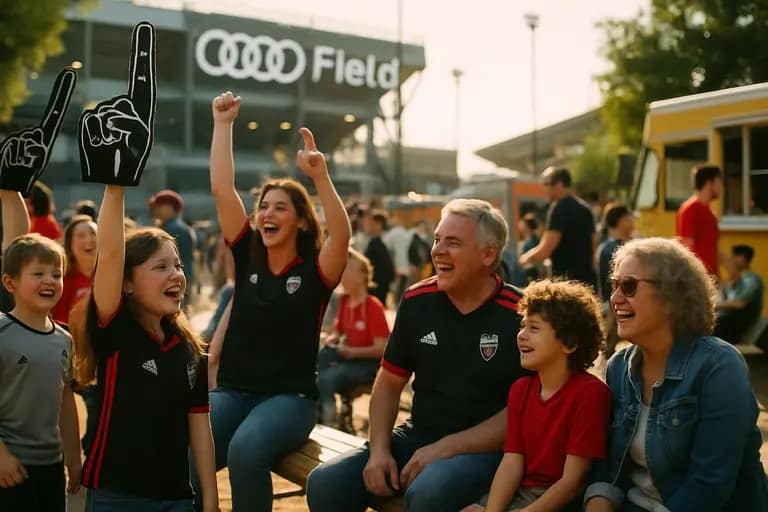
Adding 8,000 seats would change the feel of Audi Field on matchdays. Higher capacity can create more ticket inventory and may support larger events, but it also places pressure on entries, concourses, restrooms, concessions, transit flow, and neighborhood movement before and after matches. A larger building has to work for regular supporters, visiting fans, families, stadium staff, and nearby residents.
The year-round-use argument is tied to the roof and ancillary facilities. If the facility can host more activity in colder months, the team and city may see a broader event calendar. Yet the operational side should be tested carefully. Winter use can mean different staffing patterns, heating and maintenance needs, and different crowd behavior. A stadium designed for more months of activity should be judged on how it handles those practical demands, not only on renderings or capacity figures.
Community Engagement Before The Hearing
The October 23, 2026 hearing gives residents and stakeholders a formal point to press for clarity. Useful questions include how stadium-generated revenue will be tracked, how hiring commitments will be reported, how cost overruns will be verified, and how construction will affect access around Buzzard Point. Community engagement is strongest when it moves beyond support or opposition and asks for measurable terms.
- Labor reporting: public updates on resident hiring, apprenticeship participation, and contractor involvement.
- Fan operations: plans for entrances, exits, transit coordination, concessions, restrooms, and accessible seating after expansion.
- Neighborhood impact: construction staging, traffic plans, noise management, and communication with nearby residents.
- Financial accountability: clear reporting on public installments, stadium-linked revenues, and cost overrun responsibility.
Sports facility debates benefit from shared reference points. Readers tracking venue terms, ownership records, and civic facility topics can also compare related sports venue reference pages through wikiapp.org, a resource designed to offer insights into sports facility developments.
Audi Field Expansion As A Civic Test Case
The Audi Field Expansion proposal now functions as a test of how Washington wants to build sports facilities after committing attention and public resources to other major venues. The labor agreement gives the project a clearer workforce structure. The proposed funding plan gives the city a defined payment schedule. The roof and ancillary facilities give D.C. United a sports operations argument tied to the 2027 calendar change.
None of those pieces alone resolves the public question. The stronger case will depend on whether the District can verify community benefits, control public exposure, and maintain fan and neighborhood access during construction and after completion. If the Council advances the proposal after the October 23, 2026 hearing, future facility projects in Washington will likely be judged against the same set of expectations: formal labor terms, local hiring goals, clear public-private cost shares, and venue designs that can serve more than a narrow game-day calendar.